

For businesses competing in real estate, finance, hospitality, and e-commerce across the United Arab Emirates, these aren't optional flourishes. They are the baseline expectations of a market where digital presence directly drives revenue.
Dubai's legacy as a smart city pioneer-accelerated by the Expo 2020 infrastructure and the ongoing Digital Dubai initiatives-means that local consumers and investors interact with digital platforms that rival the best in the world. The bar is high. A slow, cluttered, or visually dated website signals a slow, cluttered, or outdated business.
This article is a practical guide for Dubai businesses evaluating their next web design or web development project. Here is what it covers:
Design trends in depth: dark mode, minimalism, and motion-what works, what fails, and how to apply each in a Dubai context.
UX and cultural nuance: bilingual interfaces, RTL Arabic support, localization for Dubai's diverse audiences.
Technology and performance: modern tech stacks, Core Web Vitals, mobile-first strategy, and mobile app development synergy.
SEO and digital marketing integration: seo services baked into design, social media marketing alignment, and performance marketing.
Agency selection: how to evaluate a web design agency or development company on track record, technical expertise, and measurable business outcomes-not just aesthetics.
Budgets, security, content strategy, and post-launch optimization: the full lifecycle of a web project built for business growth.
Dubai's Digital Landscape in 2026: What Local Businesses Need from Web Design
By mid-2026, a website in Dubai is not a brochure. It is a lead generation engine, a booking platform, a trust signal, and often the single most important touchpoint between a brand and its customer. SMEs and enterprises across diverse industries treat their websites as primary drivers of revenue-lead capture, customer acquisition, and direct e-commerce sales.
The sectors where cutting-edge web design is most competitive in Dubai include:
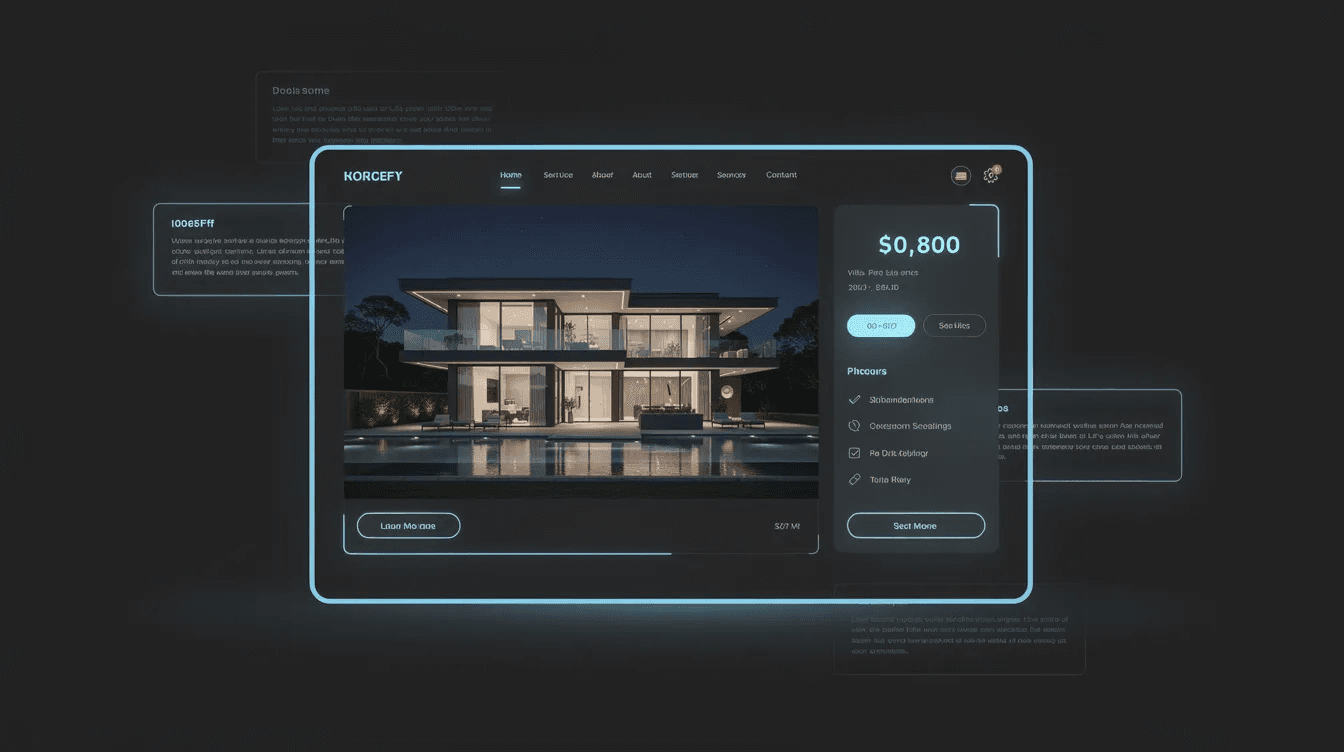
Real estate: Luxury developers in Dubai Marina and Palm Jumeirah use immersive visual storytelling-cinematic dark hero sections, interactive floor plans-to sell off-plan units to international investors.
Premium hospitality: Hotels and resort chains compete on booking-channel experience. A slow or dated site loses guests to aggregators.
Fintech and gov-tech: Digital banks in DIFC and government service portals compete on usability, speed, and trust. Minimalist dashboards and dark mode interfaces are now standard.
E-commerce and lifestyle: Fashion retailers, wellness brands, and direct-to-consumer businesses rely on ecommerce website development that converts mobile browsers into buyers.
UAE user expectations are specific and demanding:
Mobile dominant: Over 75% of web traffic in the UAE comes from mobile devices. Mobile-first design is not a best practice-it is a requirement.
Bilingual interfaces: Arabic and English with proper RTL support are no longer optional for UAE businesses.
Speed: Users expect pages to load in 2–3 seconds or less, even on mid-range 4G/5G devices.
Secure payments: Trustworthy design cues and integrated, region-specific payment processing are essential.
How the three design directions map to these expectations: dark UI reduces eye strain for late-night browsing (common during Ramadan evenings and among working professionals); minimalist layouts allow high information density without overwhelm; and motion design carries storytelling-animated property tours, scroll-triggered reveals, dynamic calls to action.
Factor | Dubai 2026 Norm | Global Average |
|---|---|---|
Mobile traffic share | 75%+ | ~60% |
Bilingual (AR/EN) support | Expected | Rare |
Target load time | Under 2s on 5G | Under 3s |
Dark mode availability | Increasingly standard | Optional |
Motion/micro-interactions | Purposeful, restrained | Varies widely |
Dark Mode in Dubai Web Design: Beyond Aesthetic Trend
Dark mode UI uses predominantly dark backgrounds with light text. It emerged globally in consumer apps around 2019–2021, but in Dubai it gained serious traction from 2024 onward. By 2026, it is part of baseline expectations for premium and tech-forward brands.
Why dark mode matters specifically in Dubai:
Night-time browsing habits: Many UAE users browse after sunset, especially during Ramadan when evenings are socially active and screen time spikes. Dark mode reduces eye strain and improves comfort during these sessions.
OLED and high-end device adoption: The UAE has one of the highest smartphone penetration rates globally. OLED screens-where true black pixels are turned off entirely-make dark mode both more visually striking and more energy-efficient.
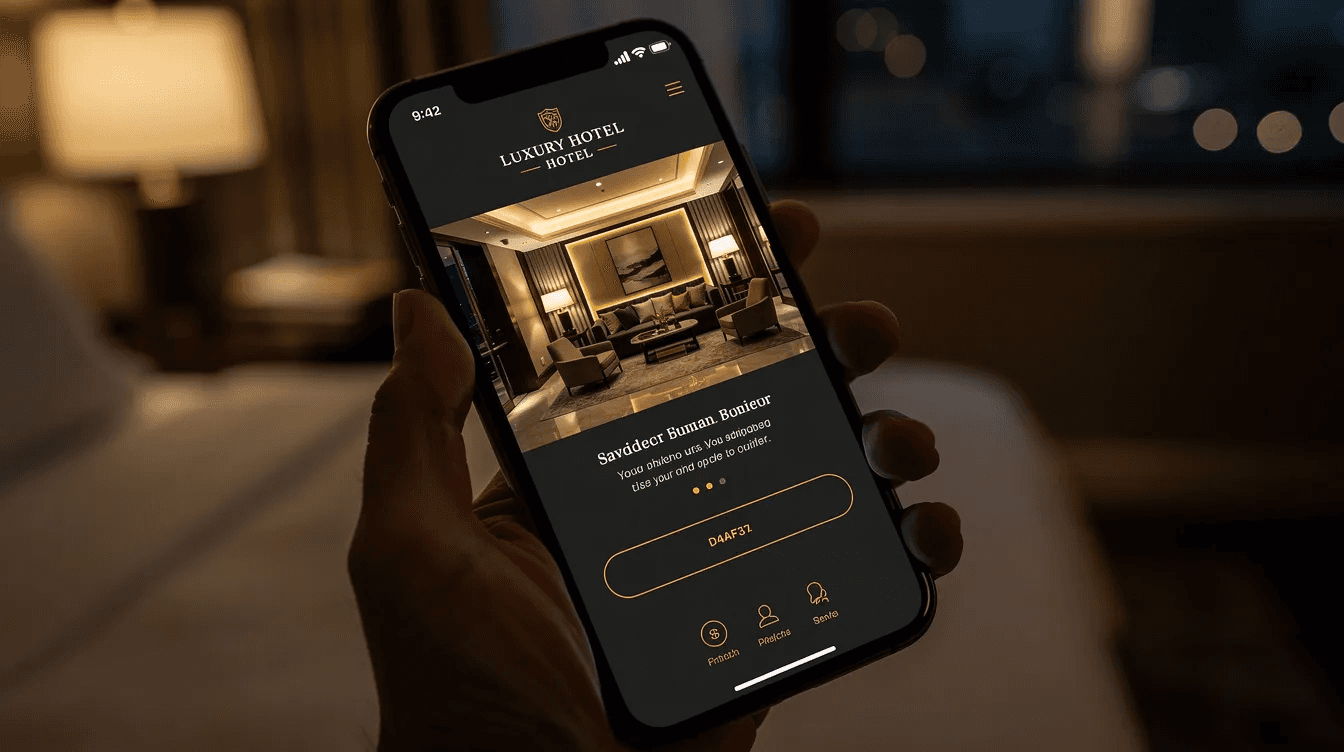
Luxury positioning: Dark interfaces convey exclusivity and sophistication. For brands in premium hospitality, luxury automotive, and private banking, dark mode is a natural fit for their brand identity.
Performance data: Dark-themed interfaces tend to show improved session durations and lower bounce rates for users accessing sites after dark, which directly impacts customer engagement.
Best practices for dark mode in Dubai web design:
Use high-contrast typography. Arabic script requires sufficient line weight and careful letter spacing to remain legible on dark backgrounds. Light font-weight hacks that work for Latin scripts can make Arabic unreadable.
Build accessible color palettes that meet WCAG AA or AAA compliance for both Arabic and English text.
Always offer a light/dark toggle. Auto-detect system preference, but give users manual override. The toggle should be visible, not buried.
Test neon accent colors carefully. Electric blue, cyan, and magenta can enhance dark UIs but must not reduce readability or cause visual fatigue.
Ensure hover and focus states remain clearly visible-critical for accessibility and usability.
Case vignettes (fictional but realistic):
LuxeHarbour Residences - A premium real estate developer in Dubai Marina redesigned its property listing site with a dark mode-first approach: full-screen dark hero videos for evening visitors, neon-accented "View Plan" interactions, and a seamless light/dark toggle. Post-launch metrics: 35% increase in session duration during sunset hours, 20% fewer drop-offs on property gallery scrolls, and 15% more inquiry form submissions-all within the first quarter.
DIFC FinTech One - A B2B digital bank launched its analytics dashboard in both light and dark themes. Approximately 40% of users opted for dark mode. Those users completed reporting tasks 10% faster (less visual glare on data tables), and the dark theme reduced bounce rate by 12% among mobile users logging in at night.
Minimalism in Web Design Dubai: Clarity for High-Value Audiences
Digital minimalism strips away non-essential design elements: spacious layouts, limited color palettes, clean typographic hierarchy, uncluttered navigation. The goal is clarity-communicating value propositions, trust signals, and calls to action without decorative distraction.
Why minimalism works for Dubai's high-value sectors:
Time-poor, high-expectation users: Business leaders, investors, and high-net-worth individuals in Dubai want to find what they need instantly. In real estate or finance, over-designed visuals erode perceived seriousness. A minimalist design communicates professionalism and focus.
Performance and SEO synergy: Fewer heavy elements-lighter images, fewer scripts, minimal decorative media-result in faster load times, better Core Web Vitals (LCP, CLS, INP), and stronger SEO rankings. This matters in a market where competitive keywords in real estate, hospitality, and finance are fiercely contested.
Mobile clarity: On a 6-inch screen, every pixel counts. Minimalist layouts ensure content remains scannable and user friendly on the devices that dominate UAE traffic.
Bilingual and RTL considerations for minimalist design:
Grid systems must mirror correctly for Arabic RTL layouts. Navigation, carousels, and icon positioning should reverse seamlessly.
Font selection is critical. Arabic screen fonts need adequate line height, letter spacing, and weight to maintain the clean feel of a minimalist design without sacrificing readability.
Typography size often needs adjustment-Arabic characters can occupy different vertical and horizontal space than their English equivalents. A design that looks balanced in English can feel cramped or sparse in Arabic without calibration.
Content guidelines for minimalist Dubai websites:
Prioritize what the visitor cares about: pricing in AED, location details (district, proximity to landmarks), trust credentials, and a single clear primary CTA above the fold.
Cut filler copy. Every sentence on a minimalist page needs to earn its place.
For corporate website pages or professional services landing pages, use concise bullet points over long paragraphs.
Performance evidence: Agencies building SEO-ready minimalist sites in Dubai are reporting LCP around 1.2 seconds and Lighthouse scores of 95+, confirming that minimalist design directly enables measurable performance gains.
Motion Design & Micro-Interactions: Bringing Dubai Brands to Life
Motion design-scroll-triggered animations, hover effects, micro-interactions, subtle parallax, page transitions-has become a competitive differentiator for Dubai brands by 2026. The shift is toward restrained, purpose-driven motion rather than flashy effects that slow pages down.
The line between effective and excessive motion:
Every animation should serve a function: guide attention, provide feedback, or support storytelling. Motion without purpose is visual noise.
Performance budgets are non-negotiable. A hero animation that blocks content or adds two seconds to load time hurts UX and SEO. This is especially important for users outside Dubai's core 5G zones or tourists on roaming connections.
Respect the prefers-reduced-motion setting for accessibility.
How Dubai brands use motion effectively:
Real estate: Animated timelines for project milestones, interactive floor plans where hovering a room reveals specs and pricing, scroll-triggered reveals of property galleries.
Hospitality: Menus that animate open with subtle fades, gallery scrolls with parallax depth, and immersive hero videos for resort experiences.
Lifestyle and retail: Hover-lift effects on product cards, count-up statistics (properties sold, branches opened), and dynamic "Book Now" buttons that subtly pulse to encourage clicks.
Examples of micro-interactions:
A "Book Now" button that changes color or slightly scales on hover, providing tactile feedback.
Form fields that validate in real-time with smooth checkmark animations.
Menu icons that morph (hamburger to X) with fluid transitions.
Loading spinners themed to local elements-a skyline silhouette assembling, Arabian geometric patterns rotating.
Smooth page-to-page transitions ("fade through") instead of hard cuts.
Aligning motion with minimalism and dark mode:
In dark mode, glows and animated highlights must be subtle. Transitions should never flash white.
Motion should support the minimal design language, not compete with it. A single well-timed scroll reveal is more effective than ten competing animations.
Use CSS animations over JavaScript where possible. Employ Lottie for vector-based, small-file-size animations. Defer non-critical animations and use intersection observers for scroll-triggered events.

User Experience (UX) Expectations in the UAE Market
UX in the UAE market is shaped by a specific combination of cultural diversity, mobile dominance, and high service expectations. Getting it right requires more than applying global templates-it demands local understanding.
Core UX principles for Dubai businesses:
Simplicity: Shallow navigation hierarchies, few choices above the fold, and predictable layouts. UAE federal website guidelines emphasize ease of navigation, minimal load time, and satisfying user experiences.
Speed: Every additional second of load time increases bounce rates. Performance is a UX issue, not just a technical one.
Trust signals: Visible local contact information, Arabic language support, secure indicators (padlock, trust badges), and recognizable payment logos.
Bilingual UX (Arabic/English):
Language toggle must be visible in the header and persist across sessions. Remember the user's preference.
RTL for Arabic versions means navigation opens from the right, icons are mirrored, carousels reverse direction, and labels are right-aligned.
Both language versions must be fully designed. An Arabic version that feels like an afterthought damages trust with Arabic-speaking users.
Frictionless journeys:
Click-to-call buttons-essential for service businesses where phone inquiries convert.
WhatsApp contact widgets, given WhatsApp's ubiquity across the UAE for both personal and business communication.
Minimal-step booking or inquiry flows. Every additional form field costs conversions.
Social logins where appropriate to reduce friction for returning users.
Accessibility and inclusivity:
High color contrast, especially for Arabic scripts on both dark and light backgrounds.
Accessible, readable fonts with proper sizing.
Alt text for all images, visible focus states, keyboard navigation support, and screen reader compatibility.
Respect reduced-motion preferences.
User testing with local personas:
A tourist booking a Dubai hotel for the first time (English, mobile, wants speed and trust).
An investor reviewing off-plan properties (bilingual, desktop and tablet, wants detail and credibility).
A parent enrolling a child in school (Arabic-first, mobile, wants clarity and contact options).
Testing with these personas across both language versions and device sizes reveals UX gaps that generic testing misses.
Technical Expertise: Technologies Powering Web Development in Dubai
The technical expertise behind a website determines whether dark mode, minimalism, and motion actually perform-or just look good in a Figma prototype. In 2026, the modern tech stack used by serious web development companies in Dubai reflects a focus on speed, scalability, and integration.
Common frameworks and tools:
Frontend: React and Next.js (with server-side rendering or hybrid static/dynamic builds), Vue and Nuxt for lighter applications. Next.js SSR ensures faster Time-to-First-Byte and SEO-friendly rendering.
Backend: Node.js for API-driven architectures, Laravel (PHP) for projects where total cost of ownership matters-still widely used by SMEs.
CMS: Headless CMS options like Strapi, Sanity, and Contentful for content flexibility. WordPress in headless or hybrid mode remains common. Shopify and Shopify Plus power e commerce platforms and ecommerce builds.
Serverless and edge: Edge functions for API integrations, serverless compute for scalable backend development without managing infrastructure.
Why SSR and performance-focused frameworks matter:
Next.js SSR delivers faster initial page loads, which is critical for SEO in competitive Dubai markets. Code splitting, image optimization, and pre-loading critical assets are built into the workflow.
Static or incremental builds for content-heavy pages (blogs, property listings) reduce server load and improve consistency.
Regional integrations:
Payment gateways: Network International, PayTabs, Tabby, Tamara-each with specific API requirements, security standards, and localization needs.
CRM integrations: Zoho, HubSpot, Salesforce-connecting web forms and user behavior to sales pipelines.
Compliance: VAT handling, UAE data residency requirements, and proper security protocols baked into every integration.
Hosting and CDN strategy:
Use regional data centers: AWS Middle East (Bahrain, UAE), Azure UAE regions. Local hosting reduces latency for UAE visitors.
Global CDN (Cloudflare, Akamai) for international reach and edge caching.
Proper TLS, WAFs, and DDoS mitigation as baseline, not add-ons.
Evaluating a web development company:
Look beyond portfolio visuals. Ask about version control, component-based design systems, automated testing, and performance benchmarks.
Multilingual code strategies should be evident: RTL support baked into the component library, dark/light theme support at the system level, not patched on after the fact.
Professional web developers document their code, maintain it, and hand it over cleanly.
Performance, Speed & Core Web Vitals in Dubai's Competitive Market
Google's Core Web Vitals-LCP (Largest Contentful Paint), INP (Interaction to Next Paint), and CLS (Cumulative Layout Shift)-directly affect rankings and user satisfaction. For Dubai businesses targeting competitive keywords in real estate, finance, or hospitality, meeting these metrics is the difference between page one and obscurity on search engines.
How design trends impact performance:
Dark mode: Ensure images are optimized (WebP/AVIF formats), use lazy loading for below-fold content, and avoid heavy alternate asset sets that cause reflow when toggling themes.
Motion: CSS animations and Lottie are lightweight. Heavy JavaScript animation libraries or scroll-jacking are not. Every motion element should fit within a defined performance budget.
Minimalism: By nature, minimalist design supports performance-fewer elements, fewer requests, faster rendering. But a single unoptimized hero video can negate all gains.
Benchmarks for Dubai:
Metric | Target |
|---|---|
LCP | Under 2.5 seconds (ideally under 1.5s) |
INP | Under 200ms |
CLS | Under 0.1 |
Total load time (4G) | Under 2–3 seconds |
Lighthouse score | 90+ |
Testing tools and approaches:
Google PageSpeed Insights with device emulation reflecting mid-range Android devices (not just flagship iPhones).
Lighthouse audits run regularly, not just at launch.
WebPageTest with UAE region simulation for realistic network condition testing.
Monitor both broadband and mobile performance-tourists on roaming and expats on varied networks represent significant traffic.
Performance budgets in practice:
Agree during discovery which visual and motion elements are allowed within the budget.
If a hero video is essential (common for real estate and hospitality), optimize aggressively: compress, serve appropriate resolution per device, and consider static fallback for slow connections.
High-performance responsive websites reduce bounce rates, increase conversions, and build stronger online visibility through better SEO rankings.
Mobile-First & Mobile App Development Synergy in Dubai
Dubai is a mobile-dominant market. With over 75% of web traffic from smartphones, many user journeys start from Instagram, WhatsApp, or Google Maps-not from typing a URL on a desktop browser.
Mobile-first web design principles:
Responsive grids that adapt fluidly, not just scale down.
Touch-friendly elements: large tap targets (minimum 48x48px), adequate spacing between interactive elements.
Avoid hover-only interactions-they don't exist on touchscreens. Use tap and long-press alternatives.
Vertical scroll storytelling that works naturally on mobile. Bottom navigation where it reduces thumb travel.
Dark mode optimized for mobile: OLED battery savings, ambient light sensor integration, and mobile apps that respect system-level dark mode settings.
When to move from responsive site to dedicated app:
Frequent repeat usage (e-commerce customers, gym members, hotel loyalty programs).
Offline features needed (maps, service booking, downloaded content).
Push notifications for re-engagement.
Hardware access requirements (camera for AR, GPS for location services).
App development tech in Dubai:
Cross-platform: Flutter and React Native are the dominant choices for hybrid mobile apps, offering near-native performance with shared codebases.
Native: Swift (iOS) and Kotlin (Android) when performance demands or platform-specific UX expectations require it.
Integration: Mobile apps and websites should share the same backend APIs, design system, and content infrastructure. A user switching from app to browser should experience the same brand, motion language, and UX patterns.
Unified experience matters:
Consistent branding across responsive websites and mobile apps builds recognition and trust.
The same design system-colors, typography, motion rules, dark/light themes-should govern both platforms. This is where software development discipline and project management rigor pay off.
SEO Services for Web Design Dubai: Building for Visibility from Day One
Modern web design services in Dubai must integrate seo strategies from the planning stage. SEO bolted on after launch is expensive remediation. SEO built into the foundation is a competitive advantage.
On-page SEO essentials:
Semantic HTML: proper use of <h1> through <h6>, <article>, <section>, and <nav> elements. Search engines rely on structure to understand content.
Optimized meta titles and descriptions for every page, in both Arabic and English.
Open Graph and Twitter Card tags for social sharing previews.
Schema markup: LocalBusiness, Organization, Product, FAQ-especially important for local businesses wanting rich results in Dubai searches.
Clean, descriptive URL structures (e.g., /properties/dubai-marina-penthouse rather than /page?id=4827).
Local SEO for Dubai:
Google Business Profile fully optimized with accurate NAP (Name, Address, Phone), photos, and regular updates.
Arabic and English keyword targeting. Many users search in Arabic-ignoring this leaves traffic on the table. An agency that provided seo support for bilingual campaigns understands this.
Location-specific landing pages: Business Bay, JLT, Dubai Marina, Downtown, DIFC. Each page should target location-relevant keywords with unique content.
Consistent citations across directories and platforms.
Technical SEO tied to design:
Crawlable navigation: avoid hiding critical content behind heavy JavaScript that search engine bots cannot render.
Internal linking: structured, logical, and updated as content grows.
XML sitemaps and canonical tags, particularly important for bilingual sites with hreflang attributes.
Dark mode, minimalism, and motion must be implemented so that content remains indexable. Splash pages, content hidden in toggles, or animations that block initial content are SEO risks.
SEO checklist during a web design project:
[ ] Keyword research in both Arabic and English completed before wireframing
[ ] Heading structure mapped to target keywords
[ ] Schema markup planned for all page types
[ ] Hreflang tags configured for bilingual pages
[ ] Image alt text strategy defined
[ ] Page speed targets agreed and tested
[ ] Internal linking architecture documented
Integrating Social Media Marketing with Your Website Experience
Dubai brands in 2026 rely heavily on social media marketing-Instagram, TikTok, Snapchat for discovery, LinkedIn for B2B-to drive traffic into their websites and funnels. The connection between social and web must be seamless.
Integration best practices:
Embed social proof on-site: curated UGC galleries, testimonial carousels, and review snippets. But load them efficiently-lazy-load social feeds, don't let embedded widgets block page rendering.
Social media management assets (story highlights, campaign visuals) should share the same design language as the website. A user clicking from an Instagram ad to a landing page should feel continuity, not whiplash.
Video testimonials can autoplay (muted) on landing pages but must be optimized for file size and not block critical content.
Motion and social proof:
Animated counters for social metrics (followers, reviews, projects completed) add energy without clutter.
Smooth transitions to social login reduce friction for returning users.
Campaign landing pages should use restrained motion and minimalist layouts focused on conversion, with consistent branding from the social ad creative.
Tracking and ROI:
Implement UTM parameters on every social campaign link.
Set up tracking pixels (Meta, TikTok, LinkedIn) cleanly, without bloating page scripts.
Data privacy compliance matters in the UAE context. Be transparent about tracking and respect user preferences.
Measure attribution from social to web conversions to calculate true ROI from digital marketing strategies.
Collaborative process:
The web design agency and social media management team should coordinate from the start-not after the site launches. Campaign visuals, landing page templates, and content calendars should be planned together.
Branding in the Age of Dark Mode: Working with a Branding Agency in Dubai
When a significant share of user interactions happen in dark mode and minimalist interfaces, branding must evolve. A logo designed in 2018 for print and light backgrounds may not survive its first encounter with a dark UI.
A branding agency working with Dubai businesses in 2026 needs to deliver more than a logo file and a color swatch. They need to deliver a digital-first identity system that works across every context.
Logo design for dark mode:
Create variants for dark and light backgrounds. A white logo on a white background is invisible; a dark logo on a dark background is equally useless.
Simplified marks that work at small sizes: favicons, app icons, social media avatars. Complexity fails at 32x32 pixels.
Motion logos for digital channels: a subtle animated intro on page load or a loading screen that reinforces brand identity through creative solutions.
Digital style guide requirements:
Typography: paired Arabic and English typefaces with specified sizes, line heights, and weights for headings, body, and captions.
Color palettes: primary, secondary, and accent colors with specific values for both dark and light contexts. Include contrast ratios.
Spacing, iconography, and motion rules: define animation duration, easing curves, and interaction patterns.
Tone of voice guidelines in both languages, calibrated for the formality level appropriate to the sector.
Consistency across touchpoints:
The same brand identity should govern the website, mobile apps, social media profiles, email templates, and offline materials (signage, business cards, exhibition stands).
Inconsistency erodes trust. In a market like Dubai, where first impressions carry enormous weight, a lasting impression requires coherence.
Audit existing identities:
Many Dubai brands built their visual identity before 2020-before dark mode was a factor, before motion logos were expected, before bilingual digital systems were the norm.
An identity audit checks whether existing assets are compatible with 2026 digital contexts and flags what needs updating.
Choosing the Right Web Design Agency in Dubai
Selecting the right web design agency in Dubai is a strategic decision, not a procurement exercise. The agency you choose will shape how your business appears, performs, and converts online.
Key criteria for 2026:
Portfolio depth: Look for demonstrated capability in dark mode, minimalism, and motion design. Static Dribbble shots are not enough-ask for live URLs, performance data, and interactive demos. Top web design companies show their work in action.
Technical expertise: Verify the modern stack (React/Next.js, headless CMS, regional integrations). Ask about code quality, testing, and documentation. A best web design company backs up visual work with engineering rigor.
SEO integration: The agency should build SEO into architecture, not treat it as an add-on. Ask how they handle seo support, schema markup, and bilingual keyword targeting.
Bilingual and RTL experience: Review Arabic versions of their past work. Is the Arabic layout a true mirror or a broken afterthought? This reveals professional expertise in the local market.
Sector experience: Have they worked across diverse industries relevant to your business? Real estate, hospitality, fintech, and e-commerce each have distinct UX requirements.
Soft factors that matter:
Communication: Can they operate fluently in English and Arabic? Are they responsive?
Discovery process: A leading web design agency invests time in workshops, user research, and strategic alignment before opening a design tool. Be wary of agencies that jump straight to mockups.
Cultural understanding: Do they understand UAE audiences, cultural norms, seasonal patterns (Ramadan, Eid, National Day), and local business practices?
Project management: Clear timelines, milestone-based delivery, regular check-ins, and defined approval processes reduce risk and build client satisfaction.
Verify with data, not decoration:
Ask for case studies with quantifiable results: conversion lifts, traffic growth, load time improvements, SEO ranking changes.
Request references from Dubai-based clients you can contact directly.
Look for repeat engagements-a trusted web design agency earns long-term relationships.
A trusted partner will be transparent about what they can and cannot deliver.
Red flags:
No performance metrics in case studies.
Outdated tech stack (jQuery-heavy, no SSR, no headless CMS option).
No bilingual or RTL portfolio examples.
Pricing significantly below market without clear explanation.
No post-launch support or maintenance offering.
How to Evaluate an Agency's Track Record & Case Studies
A strong track record for a design company in dubai in 2026 looks like this: multi-year client relationships, projects across several verticals, repeat engagements, and evidence of result oriented solutions-not just a gallery of pretty screenshots.
How to read case studies critically:
Look for a clear structure: objectives, constraints, solution details (design decisions, tech stack, seo strategies employed), and quantifiable outcomes.
Good outcomes include specifics: "+40% leads in 6 months," "LCP reduced from 4.2s to 1.3s," "bounce rate dropped 25% after dark mode launch," "Arabic organic traffic increased 60%."
Vague claims like "improved user experience" or "modern redesign" without data are not evidence. They are marketing.
What to ask agencies directly:
Can you share references from Dubai-based projects?
What was the project timeline and how did you handle scope changes?
What metrics did you track, and how did the project perform against its business objectives?
Can you walk me through one project where things went wrong and how you resolved it?
Common red flags in case studies:
No mention of performance metrics or conversion data.
Only global or international examples with no local Dubai relevance.
Case studies that focus exclusively on visuals with no discussion of technology, SEO, or outcomes.
An agency that cannot explain their process beyond "we design beautiful websites."
The ideal case study structure a reader should benchmark against:
Client context and business challenge
Discovery and strategy (research, personas, competitive analysis)
Design and technology decisions (with rationale)
Performance data (before and after)
Client testimonial with specific outcomes
Cost of Web Design in Dubai: Investment vs. Commodity
Web design in Dubai spans a wide range of investment levels. Understanding what drives cost helps businesses make informed decisions rather than defaulting to the cheapest option.
Realistic budget ranges in 2026:
Project Type | Budget Range (AED) | What's Included |
|---|---|---|
SME brochure site (template-based) | 4,400–15,000 | 3–5 pages, basic responsive design, minimal customization |
Custom business site (bilingual, dark mode, motion) | 25,000–70,000 | Custom UX research, bilingual RTL, dark/light themes, integrations, seo services |
Enterprise platform (fintech, large e-commerce) | 100,000–500,000+ | Complex integrations, custom dashboards, enterprise web design, ongoing support |
What drives costs:
Custom UX research and user testing
Number of languages and RTL layout complexity
Integration count and complexity (payment gateways, CRM, booking systems)
Level of motion design and dark/light mode support
Performance optimization and comprehensive web design testing
Hosting, security, and ongoing maintenance contracts
Pricing models used by Dubai agencies:
Fixed-price: Common for small to medium projects with well-defined scope.
Retainer: Monthly fee for ongoing optimization, content updates, and maintenance-a model that supports continuous business growth.
Growth partnerships: Performance-tied contracts where agency compensation is linked to KPIs. Higher risk for the agency, potentially higher ROI for the client.
Investment vs. commodity:
A cheap, template-based site may cost AED 5,000 upfront but lead to a redesign within 12–18 months due to poor conversions, performance issues, or inability to scale. The total cost of ownership often exceeds a bespoke solution that was built correctly from the start.
Custom websites built with tailored solutions by a best website design agency cost more initially but deliver better ROI through higher conversion rates, stronger SEO performance, and lower long-term maintenance costs. Treat web design as a strategic investment in digital transformation, not a line-item expense.
Security, Compliance & Reliability for Dubai-Based Websites
Many Dubai businesses handle payments, sensitive personal data, and confidential corporate information through their websites. Security is not optional. It is foundational.
Practical security measures:
SSL/TLS encryption on every page, no exceptions.
Secure authentication (MFA where appropriate) and encrypted data storage.
Regular security updates and patching for CMS, plugins, and dependencies.
Web Application Firewalls (WAFs) and DDoS protection as standard.
Automated backups with tested recovery procedures.
Minimize third-party scripts-each one is a potential vulnerability. Audit external dependencies regularly.
Regulatory considerations in the UAE:
The UAE Personal Data Protection Law (PDPL) governs how personal data must be collected, stored, and processed. Non-compliance carries penalties.
Data residency requirements may apply for certain sectors. Hosting in UAE or Middle East data centers (AWS UAE, Azure UAE) helps meet these requirements while also reducing latency.
Financial services and government-adjacent platforms face additional compliance layers.
Evaluating a development company on security:
Ask about incident response procedures. What happens if there is a breach?
Verify uptime SLAs-99.9% is a reasonable minimum for business-critical digital platforms.
Confirm full ownership of code and assets. You should be able to move your site to a different provider without being held hostage.
Request documentation of security practices, not just verbal assurances. A reliable partner provides transparency.
Content Strategy for Minimal, High-Impact Dubai Websites
When minimalism limits visual clutter, content strategy becomes the load-bearing wall. Every headline, value proposition, and trust signal must earn its place on the page.
Content principles for minimalist Dubai sites:
Lead with the value proposition above the fold. What does the visitor get? Why should they care? Answer in one sentence.
Local proof points build trust: years operating in Dubai, number of projects in specific districts, named client logos, UAE-specific credentials.
Use AED for pricing. Reference Dubai districts and landmarks. These details signal local relevance.
Write in both Arabic and English with equal care. Translation is not localization-tone, idiom, and emphasis should be adapted, not just converted.
Video and motion-based storytelling:
For real estate: property fly-throughs, floor plan walkthroughs, neighborhood context videos. Keep them under 90 seconds, tightly scripted, and optimized for mobile playback.
For hospitality: experience teasers-pool, spa, dining-that evoke emotion in 30 seconds.
For digital services and professional services: explainer animations showing process or outcomes. Lottie animations keep file sizes small.
Coordination between teams:
Content writers, designers, and SEO specialists should work together from the wireframe stage. Copy must fit the layout. Keywords must fit the copy. Visuals must support both.
A content strategy that is developed after design is complete will always feel forced. Plan them in parallel.
Localization & Cultural Nuance: Designing for Dubai's Diverse Audiences
Dubai's user base in 2026 is one of the most diverse on Earth: Emirati nationals, expatriates from South Asia, Southeast Asia, Europe, and Africa, tourists from every continent, and international investors. Localization goes far beyond translation.
Design choices that respect cultural norms:
Imagery: use diverse, representative photography. Avoid generic Western stock imagery that doesn't reflect the audience. Be mindful of modesty norms in imagery depending on the brand sector.
Color symbolism: green carries positive associations in Islamic contexts; certain color combinations may have unintended connotations. Research matters.
Holiday campaigns: Ramadan, Eid al-Fitr, Eid al-Adha, UAE National Day-each requires appropriate tone, timing, and visual treatment. A website design agency serving Dubai must have a calendar for these.
UX specifics for localization:
Multiple currency displays (AED plus USD, EUR, or GBP for international audiences).
Prayer time considerations for service hours and customer support availability.
Address formats matching Emirate jurisdictions and neighborhood conventions.
Contact forms accommodating international phone number formats.
Language toggle that remembers user preference and functions cleanly in both dark and light modes.
Visual storytelling with local flavor:
Motion and animation can incorporate local elements-skyline silhouettes, geometric patterns inspired by Islamic art, desert landscapes-but must be subtle and aligned with the minimal design language.
Avoid gimmicky stereotypes. A camel animation on a fintech dashboard undermines credibility. A geometric pattern accent on a loading screen enhances it.
Testing localization:
Test with real users from different demographic groups. What makes sense to an Emirati user may confuse a European tourist, and vice versa.
Ensure that localized content feels native, not translated. This requires writers and designers who understand both cultures, not just both languages.
From Launch to Growth: Ongoing Optimization & Conversion Rate Optimization (CRO)
A website launched in 2026 should be treated as an evolving product. Launch is a milestone, not a finish line. The businesses that win in Dubai's competitive digital landscape are the ones that optimize continuously.
The role of CRO:
A/B test CTAs: button text, color, position, and size. Even small changes-"Get a Quote" vs. "Book a Free Consultation"-can shift conversion rates significantly.
Test dark vs. light theme preferences by audience segment. Do evening users convert better in dark mode? Measure it.
Test motion intensity. Does removing a scroll animation improve form completion rates? Does adding a subtle button pulse increase clicks?
Test content blocks: which trust signals (testimonials, certifications, client logos) drive the most conversions and lead generation?
Analytics tools for UAE-specific insights:
GA4 with event tracking configured for key actions (form submissions, calls, WhatsApp clicks, downloads).
Heatmaps (Hotjar or similar) to visualize where users click, scroll, and stall.
Session recordings to watch real user behavior-especially valuable for identifying bilingual UX issues where users switch between Arabic and English mid-session.
Optimization cycles:
Set measurable KPIs before launch: form submissions, bookings, revenue, session duration, bounce rate. Establish baselines.
Monthly reviews: analyze data, identify drop-off points, prioritize fixes.
Quarterly deep dives: larger tests, content refreshes, design iterations.
Sample 90-day post-launch roadmap:
Month | Focus |
|---|---|
Month 1 | Baseline analytics setup, initial user testing, bug fixes, performance tuning |
Month 2 | A/B testing CTAs and form layouts, motion optimization, initial content updates |
Month 3 | Content enhancement, localization refinements, SEO performance review, roadmap for next quarter |
This approach turns web development services into an ongoing growth engine, not a one-time deliverable.
Integrating Web Design with Broader Digital Marketing in Dubai
A high-performing website sits at the center of a broader digital marketing ecosystem. It is the hub that connects SEO, social media marketing, paid advertising, email automation, and offline campaigns into a unified revenue engine.
Landing pages for specific campaigns:
Property launch campaigns need dedicated landing pages: minimalist layout, single CTA, dark mode support, optimized for the traffic source (Instagram, Google Ads, email).
Seasonal hotel offers should have time-limited pages with countdown timers (motion that serves a purpose) and clear booking flows.
Performance marketing campaigns live or die on landing page quality. The best ad in the world fails if the landing page is slow, cluttered, or disconnected from the ad creative.
Tracking and attribution:
UTM parameters on every campaign link. No exceptions.
Conversion tracking configured in GA4, Google Ads, and social platforms.
Attribution modeling to understand which channels drive leads, bookings, and revenue-so you can allocate budget to what works.
Cross-team collaboration:
When planning a redesign or new site launch, bring SEO, performance marketing, and social teams into the discovery process. Design decisions impact every channel.
Digital marketing services should be coordinated with web design timelines. A new site that launches without campaign landing pages ready is a missed opportunity.
The website is the foundation. Everything else-ads, emails, social posts-drives traffic toward it. If the foundation is weak, every other investment underperforms. This is the core of digital excellence.
Future Directions: AI, Personalization & Web Design Dubai After 2026
The design directions shaping Dubai in 2026-dark mode, minimalism, motion-are not endpoints. They are the foundation for what comes next. Businesses that build on this foundation now will be positioned to adopt the next wave of digital innovation without starting from scratch.
AI and personalization:
AI-driven content personalization is moving from experimental to practical. Expect websites that dynamically adjust content blocks, product recommendations, and even layout density based on user behavior and preferences.
Personalized dark/light mode settings: systems that learn when a user prefers dark mode (evenings) and automatically switch, or that adjust motion intensity based on device capability.
AI-powered chatbots in Arabic and English that handle complex queries-property availability, booking modifications, financial product comparisons-without human intervention. These go beyond scripted FAQs.
Emerging technologies relevant to Dubai:
WebGL and 3D experiences: Virtual property walkthroughs for real estate, 3D product configurators for retail-immersive experiences that run in the browser without an app download.
AR product previews: Furniture retailers and interior designers offering augmented reality previews through mobile browsers. A customer points their phone at a room and sees how a sofa looks in their space.
Voice interfaces: Primarily for accessibility and inclusivity, but also for hands-free browsing in contexts like driving or cooking. Arabic voice recognition is improving rapidly.
Choosing forward-looking partners:
The best ecommerce development company or web design company for your next project isn't just the one that executes today's trends well. It's the one that has an R&D mindset, follows emerging web standards, and can pilot new technologies when they mature.
Ask prospective agencies: What are you experimenting with? How do you stay current? Can you show me a prototype or proof of concept?
A leading web design company in Dubai in 2026 should be a partner in digital success, not just a vendor executing a spec.
Common Mistakes Dubai Businesses Make with Web Design
Even in a sophisticated market like Dubai, businesses make predictable mistakes with their web design projects. Recognizing these patterns helps you avoid them.
Design and performance pitfalls:
Over-designed, heavy sites that prioritize visual spectacle over speed. A site that takes 6 seconds to load loses most of its visitors regardless of how stunning it looks.
Inconsistent dark and light modes: a polished dark theme paired with a neglected light version (or vice versa) signals carelessness.
Animations that slow pages down. Parallax effects, auto-playing videos, and scroll-jacking that degrade performance and frustrate users.
Cluttered layouts that contradict minimalism-cramming "just one more element" until the page is a visual maze.
Strategic mistakes:
Ignoring SEO at the design stage and retrofitting it after launch. This is more expensive and less effective.
Not planning for bilingual content from the start. Adding Arabic after the English site is built almost always results in broken layouts and inferior UX.
Copying international designs without localizing for Dubai users. A design that works in Stockholm may fail in Dubai due to cultural, linguistic, and behavioral differences.
Choosing the cheapest option. Budget web design often leads to redesign within 12–18 months, negating any initial savings and delaying digital success.
How to avoid these issues:
Invest in proper discovery: research, personas, competitive analysis, and clear requirements.
Choose an experienced website design agency with a proven track record in Dubai.
Define performance, SEO, and conversion targets before design begins.
Plan for both languages, both themes, and all device sizes from day one.
Red flags before you sign with a web design agency:
[ ] No performance data in their case studies
[ ] Cannot show live Dubai-based projects
[ ] No bilingual/RTL portfolio examples
[ ] Pricing is significantly below market norms
[ ] No mention of post-launch support or optimization
[ ] Vague about technology stack and hosting
How to Brief Your Web Design Company for a Dubai Project
A thorough brief is the single most effective tool for getting the website you actually need-rather than the one an agency defaults to building. It aligns expectations, prevents scope creep, and gives your digital agency a clear target.
Key elements of a strong brief:
Business goals: What should the website achieve? Leads, bookings, online sales, brand awareness? Be specific.
Target audiences: Define 2–3 personas with language preferences, device usage, and decision-making factors. A collaborative process with your team surfaces insights no external agency would guess.
Competitor benchmarks: Name 3–5 Dubai competitors or global examples whose web presence you admire-and explain what you like about each.
Aesthetic direction: Dark mode preference, minimalism level, motion intensity. Include visual references.
Technical requirements: Languages (Arabic, English, others), integrations (CRM, payment gateways, booking systems), hosting preferences, and compliance requirements.
Sitemap outline: Page list with hierarchy. Even a rough draft helps.
Content: What exists? What needs to be created? Who writes it?
SEO priorities: Target keywords, local areas, and ranking goals.
Timeline and budget: Be transparent. A web development company that knows the real budget and deadline can propose realistic scope.
Include concrete KPIs:
"Increase mobile conversion rate by 20%."
"Reduce bounce rate by 30%."
"Achieve LCP under 2 seconds."
"Rank on page one for [target keyword] in both Arabic and English."
These give the agency measurable targets and transform subjective design decisions into high quality services tied to business outcomes.
Brand guidelines:
If your identity is current and documented, share the full style guide.
If it's outdated or inconsistent, consider engaging a branding agency first-or as part of the same project. A comprehensive services approach often works best.
Conclusion: Building a Future-Proof Web Presence in Dubai
Dark mode, minimalism, and motion design are not passing trends in Dubai's web design market. They are fundamental shifts in what users expect, how brands compete, and where conversions happen. Combined with technical excellence, seo support, and thoughtful localization, they form the foundation of a digital presence that drives real business success.
Choosing the right web design agency or web development company is a strategic decision with long-term consequences. The best agencies deliver not just beautiful interfaces but measurable business outcomes-faster load times, higher conversion rates, stronger SEO visibility, and genuine customer engagement across diverse industries. They function as a reliable partner, not a vendor.
If you're evaluating your current site, ask these questions: Does it support dark mode? Does it load in under two seconds on mobile? Is the Arabic version as polished as the English one? Does motion serve a purpose or just add weight? If the answer to any of these is no, it's time for a strategic conversation.
Core takeaways:
User expectations in Dubai in 2026 are high. Performance, bilingual support, trust, and design quality all matter-and they are interconnected.
Dark mode, minimalism, and motion must be intentional design decisions driven by user needs and business objectives, not aesthetic preference alone.
Technical stack, seo services, localization, and agency selection determine ROI. Get these right, and the website becomes your most powerful growth asset.
Treat your website as a product: launch it well, then optimize it continuously through data-driven CRO and a clear content strategy.
Next steps: Define or update your project brief. Shortlist agencies with proven track records in Dubai. Run discovery workshops before committing. Plan optimization cycles post-launch. Your website is not a one-time project-it is the center of your digital success.
Is dark mode actually a serious design choice or just a passing trend in Dubai?
Why does minimalism work particularly well for real estate, finance and hospitality sites in Dubai?
What is the biggest mistake Dubai businesses make with bilingual Arabic and English websites?
How fast should a Dubai business website load in 2026?
Should motion design ever be avoided on a website?


Let’s keep in touch.
Discover more about high-performance web design and online marketing. Follow us on LinkedIn and Instagram.

