

It comes down to what you tell them before any design or development work begins. This guide walks you through how to write a clear, effective brief that sets the stage for a website that delivers real results.
Why a Strong Brief Makes All the Difference
Dubai is one of the most competitive digital markets in the world. Companies across various industries are investing heavily in their digital presence, and the expectations for quality, speed, and functionality keep rising. Yet a surprising number of web projects in the UAE still run over budget, miss deadlines, or end up with a website that nobody is quite happy with.
The root cause is almost always the same. The brief was vague, incomplete, or never written down at all. Without a solid brief, a design agency in dubai is left making assumptions about your goals, your audience, your content, and your constraints. Those assumptions lead to misaligned designs, subjective debates about colour and layout, and costly rounds of revision that eat into both time and budget.
A strong brief does not require you to understand code, content management systems, or server architecture. It simply needs to communicate your business needs, your priorities, and the boundaries within which the project should operate. That clarity allows any web design agency to provide accurate timelines, realistic costs, and a proposal that actually reflects what you are trying to achieve.
Bond Media UAE is a company in dubai with more than 25 years of experience delivering website design and web development projects for businesses in the UAE and across the region. Over that time, we have seen how the quality of the brief directly shapes the outcome of every project. A detailed brief produces focused work, fewer surprises, and better results. A loose brief produces frustration on both sides.
The rest of this article will walk you through a simple, repeatable process you can follow even if you have never written a brief before. Each step builds on the one before, and by the end you will have everything you need to approach a dubai web design company with confidence.

Step 1 - Define Your Goals Before Anything Else
The first step in briefing any web design and development agency is to agree on your internal business objectives. Not colours, not layouts, not creative ideas. Goals. What does this website need to do for your business over the next twelve months?
This sounds obvious, but it is the step that gets skipped most often. When a project starts with aesthetic preferences instead of strategic direction, every decision that follows becomes a matter of personal taste. That is where endless revisions and stakeholder disagreements come from.
Think about the measurable business outcomes you want from the site. A service firm might want to generate qualified B2B leads from the UAE and Saudi Arabia. An online retailer might want to increase e commerce revenue in AED by 40 per cent. A new real estate development might need brand credibility and enquiries from international investors. A healthcare provider might need a careers portal that attracts specialist staff. Whatever the objective, write it down.
We recommend listing three to five outcomes you want to see within the first year. Tie each one to a specific KPI such as enquiry volume, online bookings, conversion rate, or newsletter sign ups. These numbers give the agency something concrete to design towards, and they help avoid the trap of building a site that looks beautiful but does not support business growth or improve business performance.
If you have broader plans for digital marketing, share those too. If you are running social media marketing campaigns, investing in search engine optimization, planning email outreach, or considering seo services and seo strategies to improve your search engine rankings, the website needs to support all of those channels. Sharing your digital marketing plans upfront allows the agency to design in features like landing pages, analytics tracking, and conversion tools from the start, rather than bolting them on later.
Your goals also shape the web development approach, the content strategy, the page structure, and the integrations. When everyone is working towards the same measurable business outcomes, decisions become faster and more focused. That is how a web design services engagement delivers genuine value rather than just a pretty homepage.
Step 2 - Know Your Audience
Even the best looking website design fails if it does not speak clearly to the people who actually make buying decisions. In a market as diverse as Dubai, where your visitors might be Emirati nationals, GCC corporate buyers, European expatriates, or tourists browsing on mobile devices, understanding your audience is not optional.
Start by describing your primary audiences in simple language. Are they Dubai based SMEs? International tourists? B2B procurement managers? Local residents who search on their phones first? Note whether your audience expects content in Arabic, English, or both. Language and cultural nuance affect everything from navigation labels to imagery to the direction text flows on the page.
If you have existing buyer personas, CRM data, or insights from your sales and customer service teams, share them. These details reveal what questions people ask before they buy, what objections they raise, and what information they search for. That knowledge allows the development agency to recommend user journeys, calls to action, and content blocks that feel natural and persuasive to real visitors rather than to internal stakeholders.
Include any data you have on device behaviour. The UAE has one of the highest smartphone penetration rates in the world, and a large share of web traffic comes from mobile. If your audience skews mobile, Bond Media will prioritise responsive web design and performance optimisation to ensure your responsive website loads quickly and works beautifully on smaller screens. Building user friendly websites starts with understanding who is using them and how.

Step 3 - Map Out Your Must Have Pages and Features
You do not need to be a designer or a developer to create a basic sitemap. A sitemap is simply a list of the pages your new website needs to have. It gives the agency a clear picture of the content scope before any visual work begins, and it helps the web development company estimate effort accurately.
For a typical Dubai business, a starting sitemap might include Home, About, Services or Products, Case Studies, Blog or Insights, Careers, and Contact. From there, you can adapt it to your own structure. A hospitality business might add a Booking page. An automotive company might include a Vehicle Configurator. A consultancy firm might need a detailed Resources section.
Beyond pages, create a separate list of functional requirements. Think about bilingual Arabic and English content with proper right to left support, enquiry or booking forms that connect to your CRM, live chat, e commerce solutions with payment gateways used in the UAE such as Network International or Telr, event calendars, or integration with third party booking engines. If you are considering mobile app development alongside your website, note that too, as some agencies offer connected web and mobile app solutions under one roof.
Separating website content pages from technical features helps the team estimate more precisely and reduces last minute surprises. Hidden costs in web projects almost always come from features that were assumed but never discussed, or added mid build without adjusting the scope. A clear functional list eliminates that risk and supports seamless functionality from day one.
Mark each page and feature as must have, nice to have, or future phase. This simple prioritisation allows the agency to propose realistic project phases. You get a focused launch that supports business success now, with a roadmap for future projects and enhancements that build on a solid foundation. Think of it as comprehensive web design planning that respects both your ambitions and your reality. The right web solutions and digital solutions grow with you over time rather than trying to do everything at once.
Step 4 - Gather Your Brand Assets
One of the most common causes of delay in Dubai web projects is missing or incomplete brand assets. When the agency reaches the design phase and discovers that the logo file is a low resolution JPEG, the brand guidelines are outdated, or the photography does not exist, work stalls. That pause costs time and money.
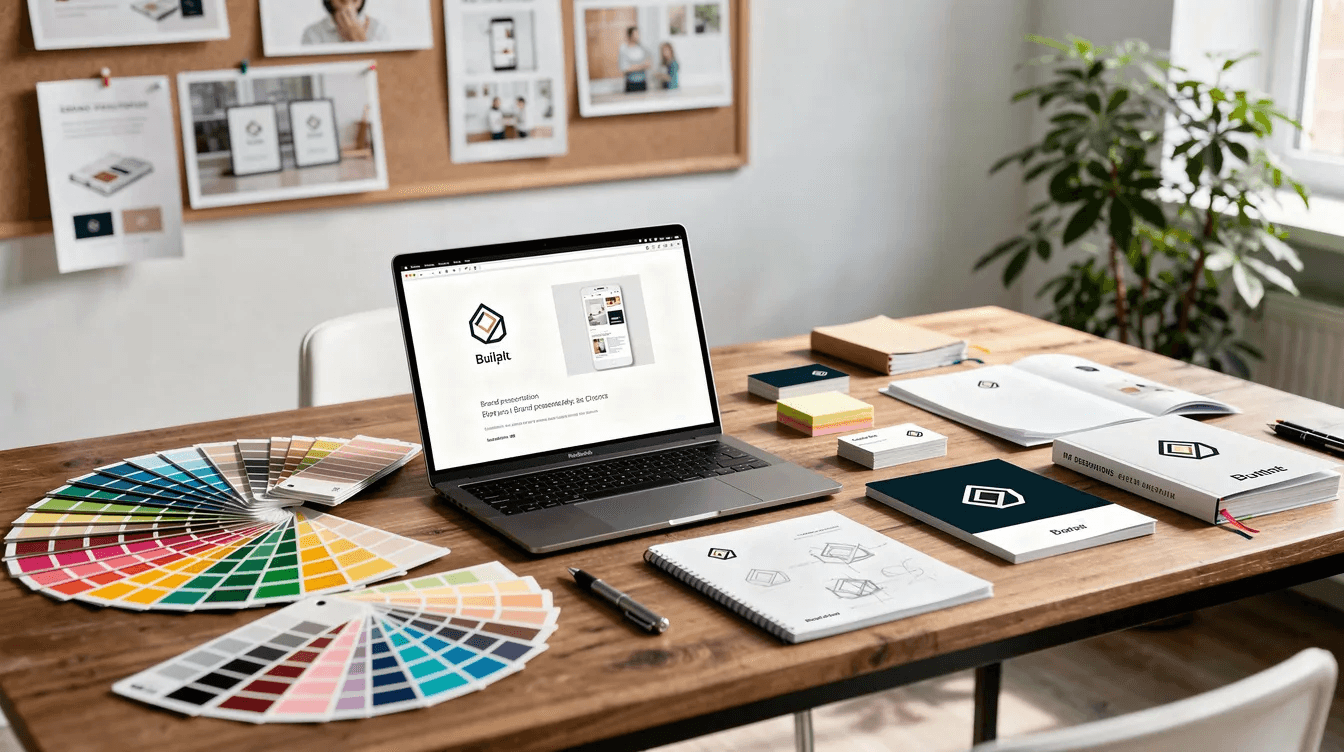
Before you brief a design company or branding agency, gather the following: logo files in vector formats such as SVG or AI, brand guidelines covering colour palettes and usage rules, font files or licence details, and any existing templates, brochures, or layouts that reflect your current identity.
Photography and video are equally important. If you have professional images of your team, your products, your premises, or Dubai locations that are relevant to your business, collect them. If not, flag that early so the agency can recommend a shoot or source appropriate stock imagery. Be honest about what exists and what does not.
Tone of voice matters just as much as visuals. Share existing marketing materials, social media posts, or presentation decks that feel on brand, even if they are imperfect. These samples help agency copywriters match your voice and ensure that the website content sounds like your company, not like a generic template.
If some elements are missing entirely, that is fine. Bond Media UAE offers Branding and Identity services for clients who need to refine or build their brand before going online. But having a clear picture of what is available versus what must be created will save both time and cost, and it gives the design company a honest starting point.
Step 5 - Set a Realistic Budget Range
Many clients in Dubai hesitate to share their budget with an agency. The worry is understandable: nobody wants to feel like they are handing over negotiating power. But transparency around budget is one of the most helpful things you can do.
Website development costs in Dubai vary widely. A basic website or simple brochure site for a small business might fall in the range of AED 1,500 to AED 12,000. A more polished corporate site with a content management system and custom integrations typically sits between AED 15,000 and AED 35,000. Full e commerce platforms can range from AED 8,000 for a simple store up to AED 80,000 or more depending on product count, payment gateways, and shipping features. Custom web applications and enterprise platforms start around AED 40,000 and can climb well beyond AED 200,000.
Rather than giving a single fixed number, define a sensible range. Separate the initial design and build investment from ongoing costs such as hosting, maintenance services, security updates, and digital marketing services. Many Dubai businesses are caught off guard by recurring fees for hosting or technical support that were not discussed at the outset.
When you share a budget range, Bond Media can recommend the right technology, the appropriate level of custom website design, and whether to phase the project. An open conversation about money does not mean you will automatically spend the maximum. It means the agency has the context needed to propose affordable web design options or more advanced digital services depending on what truly supports your business needs. A good development company will respect your range and show you where the investment goes.
Whether you are looking for a custom website with advanced integrations or an effective but straightforward digital presence, budget transparency helps the agency deliver solutions that match your expectations without guesswork. The goal is professional web design that aligns with your resources and your ambitions.
Step 6 - Share Reference Websites You Like (and Why)
Visual references are one of the fastest ways to align expectations between your team and the agency. When stakeholders within your organisation have different ideas about what a modern Dubai website should look and feel like, reference sites help surface those differences early, before any design work begins.
Collect three to five websites you admire. Include at least one from your own industry and one from outside the region. For each, write a short note about what specifically appeals to you. Is it the clean layout, the bold typography, the use of photography, the speed, or the way information is organised? The reasoning behind your preferences matters far more than the examples themselves, because it helps the design agency understand your creative vision and translate it into something original.
It is equally helpful to share sites you dislike. A brief explanation of what puts you off, whether it is cluttered visuals, confusing navigation, slow loading, or generic stock imagery, prevents the agency from heading in a direction that will not resonate with decision makers.
Bond Media will not copy these references. Top web design companies use them as conversation starters. They spark discussion about tone, structure, and user experience, and they help the team create professional websites that feel distinctive rather than derivative. If you browse websites built by agencies across diverse industries and take notes on what makes them effective, you will arrive at the briefing conversation with a much clearer sense of your own preferences and your audience's expectations.
Step 7 - Be Clear on Timeline and Key Milestones
Realistic timelines protect both you and the agency. When multiple departments need to review designs, supply content, or approve copy, the schedule needs to reflect that reality rather than an optimistic best case scenario.
Start by sharing any fixed dates. If you are exhibiting at a trade show, launching a product, or running a seasonal campaign, the agency needs to know so the project plan can work backwards from those project deadlines. Web development services delivered under pressure almost always cost more and carry greater risk of quality compromises.
A typical professional timeline is broken into phases: discovery, design, development, content population, testing, and launch, with clear milestones for client feedback and approvals at each stage. For a simple brochure site, expect two to four weeks. A corporate site with several pages and a CMS might take four to eight weeks. E commerce stores generally need six to ten weeks, and custom platforms or portals can take three months or more. Project management discipline at every phase keeps these timelines honest.
Rushing compresses every stage. Discovery gets shortened, design reviews get squeezed, testing gets skipped, and the result is a website that launches with problems instead of polish. If you are working with a development agency that values quality, they will be honest about what is achievable in your timeframe.
Be upfront about your own availability too. If key stakeholders travel frequently, if internal approvals typically take two weeks, or if content writing will be handled by your team rather than the agency, say so. Bond Media can build a schedule that respects your working reality and accounts for digital trends such as evolving browser standards and platform updates. That honesty upfront is far better than a missed deadline later.
What to Expect Once You Submit Your Brief
Once you have followed the steps above, you are in a genuinely strong position. You have a document that tells a website design agency exactly what your business needs, who it serves, what pages and features are required, what assets are available, what the budget looks like, and when it needs to be live. That is more than most agencies receive, and it sets the tone for a productive relationship.
A professional digital agency like Bond Media UAE will typically respond by scheduling a discovery call or meeting. This is not a sales pitch. It is a conversation to clarify any remaining questions, explore the goals you have outlined, and discuss suitable approaches. Good agencies ask thoughtful questions at this stage because they want to deliver solutions that genuinely fit your situation.
The next step is usually a structured proposal. This document outlines the scope of work, sitemap, visual concept or mood board, technical approach, estimated timeline, and investment, all mapped back to the goals in your brief. It should feel like a direct response to what you have written, not a generic template.
A clear contract or statement of work then sets expectations on deliverables, feedback rounds, content responsibilities, technical support arrangements, and post launch support such as updates and minor enhancements. It defines what is included and, just as importantly, what is not. Any professional web design company will welcome questions, explain technical terms, and make sure you understand the full picture before any work starts. That transparency is what separates a reliable digital agency from one that causes frustration.

Ready to Brief Bond Media? Here is How We Make It Easy
Bond Media UAE is a leading web design agency based in Dubai with more than 25 years of experience helping brands across diverse industries create effective, distinctive websites. We have worked with startups, established corporations, and everything in between, delivering innovative digital solutions and tailored solutions that serve real business goals.
Our team guides new clients through a structured briefing process. Through workshops, checklists, and discovery sessions, we help turn rough ideas into a clear, actionable document. Whether you arrive with a detailed brief or just a handful of thoughts, we will work with you to refine it into a solid foundation for your project. We focus on client satisfaction at every stage, and our comprehensive services are designed to make the process as smooth as possible.
Bond Media offers Web Design and Development for custom website design projects of any scale, from a basic website for a growing startup to a complex multilingual platform supporting digital transformation. Our Branding and Identity service helps clients who need to sharpen their brand before building a site. And our Web Copywriting team creates clear, persuasive website content that reflects your voice and supports your goals.
We are proud to deliver tailored solutions and innovative solutions that support measurable business outcomes across the region. As a design agency committed to digital innovation and delivering innovative web solutions, we bring both creative vision and technical expertise to every engagement. Our approach spans social media management integration, search engine optimization planning, and responsive website builds that perform beautifully on every device.
If you are ready to start the conversation about your next website, we would love to hear from you. Share your draft brief or even a rough outline with us, and we will take it from there. Visit our contact page to get in touch. Whether you are looking for a complete digital presence, e commerce solutions, mobile app development support, or a focused site redesign, Bond Media is here to make it happen.
How long does it usually take to prepare a proper web design brief?
Do we need technical knowledge to brief a web design company?
How should we handle feedback from multiple internal stakeholders?
What if our goals or requirements change after the project starts?
Can Bond Media help if we only have a rough idea, not a full brief yet?


Let’s keep in touch.
Discover more about high-performance web design and online marketing. Follow us on LinkedIn and Instagram.

