

This guide breaks down how Dubai design agencies manage the tension between visual craft and measurable performance, and what that means for businesses choosing a partner in this market.
Answering Your Question First: Why Hire a Design Agency in Dubai Right Now?
A design agency in Dubai operates under a unique pressure that most agencies elsewhere simply do not face. The city sits at the intersection of finance, e commerce, tourism, and tech, with clients who demand brand identity systems that feel premium on a billboard along Sheikh Zayed Road and load in under two seconds on a mid-range Android over a 4G connection. This is not a market where you can choose aesthetics or performance. You need both, and the agencies that survive here have figured out how to deliver both.
Dubai's position as a regional hub means brands headquartered here are launching into KSA, North Africa, South Asia, and Europe simultaneously. That cross-border ambition forces agencies to think about multilingual interfaces, regional payment flows, regulatory compliance, and AI visibility from the very beginning. The Expo 2020 legacy, the growth of Dubai Design District (d3) as a creative ecosystem, the concentration of fintech startups in DIFC, and the government's smart city initiatives have all pushed the bar higher. Agencies here are not simply making things look good. They are building design systems that connect brand strategy, UI/UX, custom software development, digital marketing, and search performance under one roof.
What follows is a detailed guide to understanding how Dubai design agencies balance aesthetics with performance, how to evaluate them, what to expect from their processes, and how to prepare before you reach out. Whether you are a startup entering a new market, a scale-up expanding across the Middle East, or an enterprise refreshing a tired digital presence, the frameworks here will help you make a sharper decision.
The Dubai Design Landscape in 2024–2026
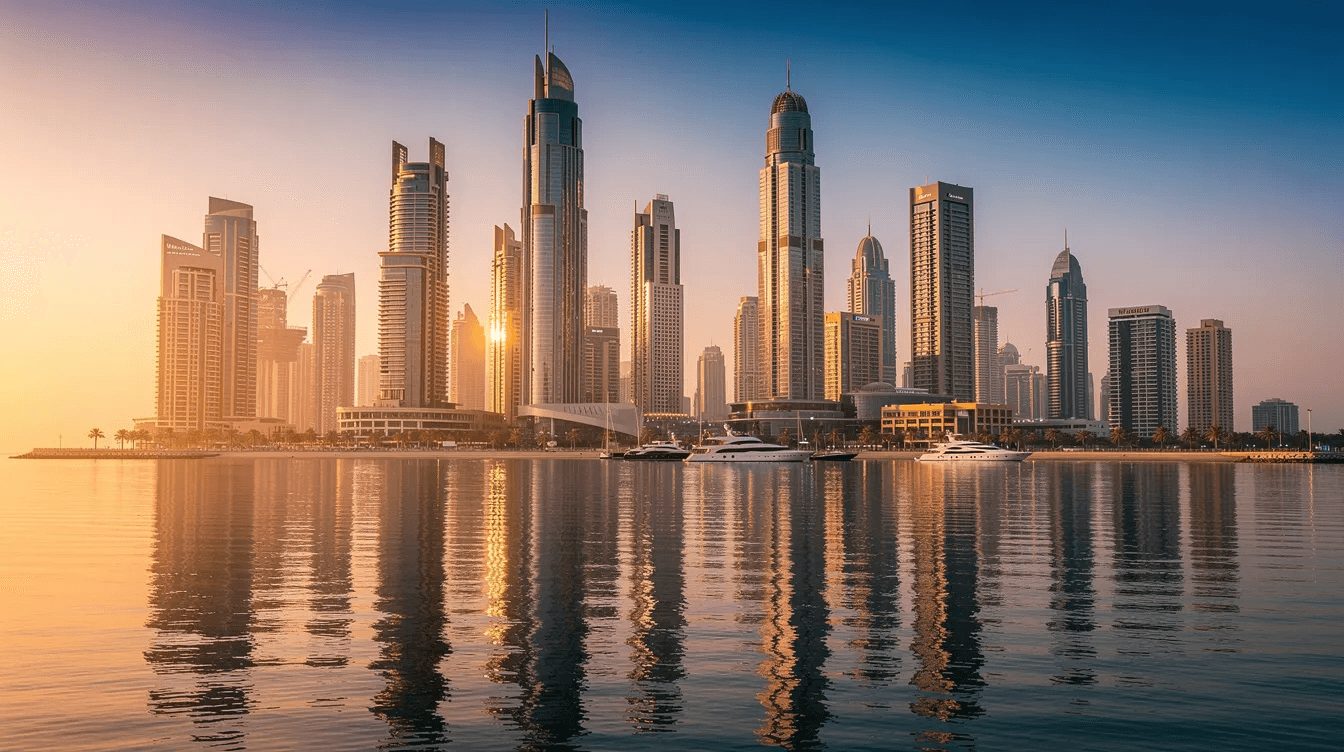
Dubai has spent the better part of a decade positioning itself as a design and innovation hub, and the results are visible. Dubai Design District (d3) now supports over 1,100 businesses and 20,000 creative professionals, making it one of the densest creative clusters between London and Singapore. Dubai Design Week, GITEX, and events tied to the Expo legacy draw global talent and attention annually.
Global and regional businesses from Europe, KSA, India, and Africa use a design agency in Dubai as a base to reach MENA markets. The city's timezone bridges Asia, Europe, and East Africa, and its regulatory environment in free zones like DIFC and DMCC makes it operationally efficient to set up. Sectors like fintech, logistics, hospitality, real estate, and e commerce shape demand. Agencies here design complex dashboards for investment platforms, multilingual booking flows for hospitality groups, and mobile-first checkout experiences for regional retailers.
Compared to agencies in London or Singapore, Dubai agencies often move faster due to proximity to high-growth markets and a lower cost base for skilled expat talent. The trade-off is that clients expect the same level of craft found in mature markets, plus deep cultural awareness. Designing for a city with over 200 nationalities means interfaces must feel global yet respect Arabic script, right-to-left layouts, and cultural norms around events like Ramadan and National Day.
AI tools have accelerated the pace. Agencies use Figma AI for layout automation, Midjourney for art direction exploration, and AI-assisted usability feedback to validate prototypes in Arabic and English before a single line of production code is written. Meanwhile, the Design Sector Strategy 2033 approved in late 2024 aims to support 500 design businesses, incubate over 100 design startups, host 100+ design events annually, and increase higher-education design enrolments by 20%. The ecosystem is not slowing down.
How Dubai Design Agencies Balance Aesthetics with Performance
The central tension is real and persistent: brands want visually stunning graphic design, rich motion, 3D elements, and immersive storytelling. At the same time, they need fast, accessible, conversion-oriented, and AI-discoverable experiences. A creative design agency that only prioritises aesthetics will ship beautiful sites that haemorrhage users on mobile. One that only prioritises speed will produce generic, forgettable interfaces.
Top design agencies in Dubai manage this tension by defining performance constraints early. During the brief stage, agencies now set specific KPIs alongside visual goals: Core Web Vitals targets (Largest Contentful Paint, First Input Delay, Cumulative Layout Shift), page speed benchmarks (often sub-2 seconds on mobile 4G), form completion rates, cart abandonment rates, SEO ranking targets, and increasingly, AI answer visibility through AEO. These numbers are not afterthoughts. They are baked into the design system from the start.
Practical techniques include building component libraries where each UI module has a defined performance budget. Art direction, motion, and 3D visuals are constrained by specific rules: controlled use of hero video (compressed, lazy-loaded, with static fallback), optimised image assets in WebP or AVIF formats, deferred non-critical JavaScript, and progressive enhancement so core content is accessible immediately. Typography scales are designed for both Arabic and Latin scripts, with font loading strategies that prevent layout shifts.
A concrete example from the UAE market illustrates this well. Emirates Techhub documented a project with a UAE retail brand where they reduced homepage load time by 42%, improved mobile form completion by 29%, and increased qualified inquiries by 38% over 90 days. The approach was not to strip out the hero section or flatten the visual identity. Instead, they optimised asset delivery, simplified the form flow, and restructured the mobile experience while preserving the brand feel.
Performance also covers accessibility, maintainability, and CMS usability. Agencies build content management dashboards so marketing teams can launch campaign pages and update content without developer support, ensuring contrast ratios meet WCAG standards, screen-reader compatibility is tested, and alt text is present throughout. The result is a system that marketing teams in Dubai can operate independently, month after month.
What Makes a Leading Design Agency in Dubai Different?
Not all graphic design agencies operate at the same strategic and technical level. The difference between a competent studio and a leading one is visible in how they define the problem, not just how they execute the solution.
A top-tier design agency in Dubai is strategy-led, staffed with senior talent, and cross-disciplinary. It combines branding agency expertise with UX research, front-end engineering, and digital marketing into a single workflow. The agency is obsessed with measurable results, not just portfolio aesthetics. This means the team includes strategists, UX researchers, visual designers, motion specialists, developers, and performance marketers who work closely together, not as separate departments handing off files.
The defining difference is what might be called "one system, not separate briefs." Leading agencies unify brand identity, UX, content, SEO, and AI visibility into a single architecture. The brand platform document informs the design system, which informs the component library, which informs the CMS structure, which informs the content strategy, which feeds search and AI discoverability. This is not theoretical. It is how serious agencies avoid the common problem of beautiful brand guidelines that break the moment they touch a real website or mobile app.
Many of these agencies cap the number of concurrent clients or insist on senior-only resourcing. Typical team sizes range from 10 to 25 specialists, and the professional team assigned to your project is the team that actually does the work, not juniors supervised loosely by the person you met in the pitch.
Contrast this with low-cost production shops that focus only on making things visually appealing or only on development speed. The risk is predictable: beautiful but slow sites that tank in search rankings and ad performance, or fast but generic and off-brand outputs that leave no lasting impression. If you are evaluating agencies, look for Dubai-specific proof points: work with government departments, leading banks, major developers like Emaar, or regional e commerce brands. A strong track record with these entities signals both creative capability and operational seriousness.
Integrated Services: Branding, Web, Digital, and Custom Development
The best graphic design agencies in Dubai operate as full-service studios, and the reason is practical: handoff friction between separate branding, design, development, and marketing agencies is one of the biggest causes of project delays, brand inconsistency, and performance trade-offs.
The core service pillars typically break down as follows. Brand strategy and branding and identity form the foundation: positioning, naming, visual identity, and verbal identity that anchor everything downstream. UI/UX and product design translate that identity into functional interfaces for websites, mobile applications, and internal tools. Web design and development bring those interfaces to life using platforms like Webflow, WordPress, headless CMS setups, or fully custom builds. Digital marketing, including SEO optimisation, AEO, social media marketing, and lead generation, ensures the work reaches the right audience and performs commercially.
What makes this integration powerful is the connection between stages. A branding agency in Dubai that also builds websites can ensure the brand platform directly informs the design system, which flows into the web and product UI, which is then measured through campaigns and performance analytics. There is no translation gap between what the brand looks like in a pitch deck and how it behaves in a checkout flow.
Custom software development becomes necessary when off-the-shelf solutions cannot support the business requirement: booking engines, investment dashboards, multi-vendor e commerce platforms, or internal operational tools. Knowing when to build custom versus when to use low-code or no-code tools like Webflow or Shopify is a judgement call that saves clients significant time and money. An agency with both creative and engineering capability makes this call more honestly because they are not incentivised to over-engineer.
Typical tool stacks include Figma for design, Webflow or React for front-end, Shopify for e commerce, GA4 and Hotjar for analytics, HubSpot for CRM and marketing automation, and structured CMS setups for content management. This concrete stack matters because it determines how fast campaigns can launch, how easily content teams can operate, and how reliably performance can be monitored.

Brand Identity that Performs: Beyond Looks
Brand identity is not a logo. It is a system of strategic and creative choices: positioning, naming, visual identity, verbal identity, and the rules that govern how all of these appear across every touchpoint. When a design agency builds a full brand identity system, the deliverables include a logo system, grid-based layout rules, responsive typography scales (including Arabic scripts), iconography, motion rules, colour systems, and content tone-of-voice guidelines.
A branding agency in Dubai now designs identity systems that must work simultaneously on billboards along Sheikh Zayed Road, in mobile app development contexts, inside Instagram Reels, on bank statements, and within AI answer snippets. This range of applications is what separates a brand identity from a brand collateral package. The identity is the underlying system. The collateral is what it produces.
The performance side of brand identity is often overlooked. A well-designed identity delivers recognisability at a glance, clarity of positioning in cluttered feeds, memorability in competitive categories, and semantic clarity for search engines and AI models. When an AI system like ChatGPT or Gemini references a brand, the clarity of the brand's positioning and entity structure determines whether that reference is accurate, favourable, or even present at all.
Consider a scenario where a mid-size banking brand in the UAE refreshes its identity to support new digital products and omnichannel experiences across UAE and KSA. The agency would develop brand guidelines that specify how the logo behaves at 16 pixels (app icon) and 16 metres (building signage), how Arabic and English typography coexist without visual hierarchy conflicts, and how the colour system adapts across light and dark mode interfaces. These are not aesthetic preferences. They are functional requirements.
Agencies stress-test brand identities across real touchpoints: app store listings, Instagram Stories, POS terminal screens, investor pitch decks, email signatures, and customer service scripts. A strong brand is one that remains coherent and recognisable across all of these, without requiring manual intervention every time marketing materials need to be produced.
UI/UX and Digital Product Design for the MENA Market
UI/UX design is a core discipline for any serious design agency in Dubai, particularly for SaaS platforms, fintech products, govtech portals, and e commerce experiences. The MENA market introduces specific UX considerations that agencies in other regions simply do not encounter daily.
Right-to-left Arabic interfaces require more than mirroring a layout. Navigation patterns, reading flows, icon directionality, and form field behaviour all need to be designed intentionally for RTL. Language toggle functionality must be seamless and persistent across sessions. Regional payment options like Tabby, Tamara, Mada, and local bank cards require integration into checkout flows that feel native rather than bolted on. Regulatory consent flows for financial products must be clear, compliant, and not interrupt the user experience to the point of abandonment.
Agencies conduct user research in Dubai through stakeholder interviews, usability tests with Arabic and English speakers, and both remote and in-person testing sessions. Co-working spaces in DIFC and d3 serve as convenient testing venues. Understanding client requirements through research, rather than assumption, is what separates user experiences that convert from those that simply look polished.
Performance is built directly into UX. Agencies measure task completion times, error rates, and funnel drop-off at each stage. Iterative design sprints remove friction: if a KYC flow takes seven steps and loses 40% of users at step four, the agency redesigns that step, tests again, and measures the impact. This is hands on approach work that requires both design skill and analytical rigour.
Complex product types common in the region include property search portals with multi-language filters, multi-currency banking apps for cross-border clients, B2B logistics platforms managing fleet and cargo, and government service portals serving millions of residents. Responsive design for these products is handled mobile-first, because GCC mobile usage is among the highest globally. The UAE's median mobile download speed exceeds 614 Mbps, which enables richer experiences but also raises expectations for speed and responsiveness.
Web Design & Development: From Visual Concept to High-Performance Build
Turning a Figma prototype into a fast, stable, SEO-friendly website is where the aesthetics-versus-performance tension becomes most concrete. Dubai agencies handle this transition through a structured workflow: information architecture, wireframes, visual design, design system documentation, front-end build, CMS setup, QA, performance optimisation, and launch.
Specific performance tactics make the difference. Images are converted to WebP or AVIF formats with responsive sizing. JavaScript is code-split so only the code needed for the current view loads initially. CSS is minified and critical-path styles are inlined. CDN distribution ensures assets are served from nodes close to GCC users. Caching headers are configured aggressively for static assets. And Core Web Vitals are monitored throughout development, not checked once before launch.
Design agencies validate performance using Lighthouse reports, GTmetrix, Google Search Console, and synthetic monitoring tools that simulate real user conditions. The goal is not a perfect score in a lab environment but consistent, fast performance for real users on real devices and networks. Testing includes emulation of mid-range Android devices on 4G connections, because that is a significant share of real-world traffic in the region.
A UAE e commerce platform, for instance, might target sub-2-second load times across GCC even on 4G mobile networks. Achieving this while maintaining high quality work on product imagery, brand-consistent layouts, and interactive filtering requires every optimisation to work together: lazy loading below-the-fold images, deferring third-party scripts, using server-side rendering for product listing pages, and keeping total page weight under 1.5MB.
Hosting and infrastructure choices also matter for regional performance. Using data centres in the UAE or nearby regions reduces latency for GCC users. For projects with data compliance requirements, particularly in finance or government, hosting location is not just a performance consideration but a legal one. Web design that looks world-class but loads slowly from a server in Virginia is a failure in this market.
AI Search, SEO, and Answer Engine Optimisation (AEO)
AI systems like ChatGPT, Gemini, Perplexity, and Microsoft Copilot now answer user questions directly, and this is changing how brands in Dubai are discovered. A significant share of prospective customers, investors, and partners are now asking AI tools questions like "best design agency in Dubai for fintech" or "which agencies handle Arabic and English branding" and receiving direct answers without clicking through to a website.
AEO, or Answer Engine Optimisation, is the practice of structuring your content, site architecture, and entity information so that AI models can extract, cite, and recommend your brand. It complements traditional SEO for Google and Bing rather than replacing it. Where SEO optimises for ranking in a list of links, AEO optimises for being the answer inside a generated response.
Design agencies that take this seriously structure content with clean HTML, schema markup (FAQ, HowTo, Organisation), entity-based information architecture, and concise summaries of 40 to 60 words that are optimised for extractability. This means service pages are not just visually engaging but semantically structured so AI retrieval systems can parse them accurately.
The practical impact is measurable. Agencies working in this space report clients achieving citation presence in 20 to 35 percent of priority buyer prompts by month six, and some report AI citation rate increases of up to 68 percent after restructuring content and entity architecture. For a B2B or financial brand, this might involve restructuring service pages, publishing original research, building FAQ hubs, and ensuring metadata is accurate and comprehensive.
Practical steps agencies advise include unblocking AI crawlers in robots.txt, publishing original data and insights that AI models can reference, structuring knowledge hubs around clear topic clusters, and keeping business entity information (name, services, location, credentials) consistent across all platforms. This is an area where most agencies are still catching up, and the ones doing deep work on entity SEO and citation tracking have a meaningful advantage.
Graphic Design & Digital Design Across Touchpoints
Core graphic design and broader digital design serve different but overlapping purposes within a design agency context. Graphic design produces the visual assets: social media campaigns, pitch decks, event branding, outdoor advertising, and print materials. Digital design extends this into interactive and motion-based formats optimised for screens, platforms, and performance.
Key deliverables include social media campaigns designed for Dubai and KSA audiences across Instagram, LinkedIn, TikTok, and X. Pitch decks for investors are designed to communicate complex ideas clearly and leave a positive impression. Event branding for exhibitions at Dubai World Trade Centre, GITEX, and Dubai Design Week requires large-format production that translates to digital promotion. Out-of-home advertising in Dubai Marina or Downtown demands eye catching designs that read at speed and scale. Digital signage in malls, airports, and lobbies adds another format requiring motion-aware design.
Agencies design modular visual assets that can be repurposed across platforms without losing brand consistency. A single campaign concept produces social assets for Instagram carousels, LinkedIn banners, YouTube thumbnails, email headers, and web banners. This modularity is not just efficient; it ensures the brand remains coherent as marketing strategies span multiple projects and channels.
Motion graphics and short-form video are optimised for performance: file size limits for social platforms, aspect ratio specifications, and ensuring legibility on small screens. The collaboration between graphic designers, copywriters, and performance marketers ensures creative concepts support click-through rate and conversion, not just visual impact.
Culturally sensitive design is a constant consideration. Ramadan campaigns, National Day celebrations, and Expo legacy references require visual treatments that resonate with local and regional audiences while maintaining global aesthetic standards. A creative services team in Dubai navigates this daily, balancing cultural fit with contemporary visual language.
Branding Agency in Dubai: Strategy Before Design
Strategy-first branding is critical in Dubai's saturated markets. Real estate launches, new fintechs, luxury hospitality brands, and e commerce entrants all compete for attention in a relatively concentrated market. Without clear positioning, even the most visually appealing brand fades into noise.
A typical strategic process begins with discovery workshops where the agency and client team align on business objectives, competitive landscape, and target audience. This is followed by competitor and sector audits, stakeholder interviews, and the development of a brand positioning framework. The positioning defines what the brand stands for, who it serves, how it is different, and why that difference matters.
Agencies connect business objectives directly to strategic brand choices. A startup preparing for fundraising needs a brand that signals credibility and ambition to investors. A legacy UAE retailer entering KSA needs repositioning that resonates in a new market without alienating existing customers. A fintech pursuing IPO readiness needs brand architecture that supports multiple product lines under a coherent umbrella. In each case, the brand strategy shapes every design decision that follows.
Clear positioning in both English and Arabic is essential. Taglines, brand promises, and category definitions must work linguistically and culturally in both languages. This dual-language clarity also helps AI systems categorise the brand correctly, which directly impacts AEO performance and search discoverability.
Consider a narrative example: a legacy UAE retailer with strong offline presence but weak digital engagement. The agency conducts discovery, identifies that the brand's value proposition is unclear to younger, mobile-first consumers, and repositions the brand around convenience and curated quality. The new visual identity supports omnichannel growth, the website is rebuilt for performance, and marketing materials are unified across physical stores, e commerce, and social channels. The repositioning delivers business growth by attracting a demographic the brand was previously invisible to.
Strategy deliverables are packaged as brand platform documents, playbooks, and C-suite decks that guide future design and marketing decisions. These documents become the reference point for every agency, vendor, and internal team member who touches the brand.
Design for High-Conversion E Commerce in Dubai
E commerce in Dubai and the broader GCC is uniquely competitive. Amazon.ae, Noon, and a growing ecosystem of regional D2C brands compete alongside cross-border shoppers accessing international platforms. Design matters here because conversion rates are directly tied to how well the interface guides users from discovery to purchase.
Design patterns that drive conversion include clear product hierarchy with scannable grids, localised filters (size systems, regional availability, language), trust signals (cash-on-delivery options, recognisable payment partner logos, explicit delivery timelines), and localised shipping and return policies displayed prominently. These are not decorative elements. They are conversion levers. The company excels at e commerce design when every element on the page serves a measurable purpose.
Performance considerations are especially demanding for e commerce. Quick view overlays must load instantly. Search functionality needs to return results in milliseconds. Faceted navigation (filtering by price, colour, size, brand) must not trigger full page reloads. Product images require aggressive optimisation without visible quality loss. Server-side rendering for product listing pages ensures search engines and AI crawlers can index inventory accurately.
Mobile-first cart and checkout design is non-negotiable. Support for instalment payment options through Tabby and Tamara, Apple Pay integration, and local card processing must be seamless. The checkout flow should require the minimum viable number of steps, with guest checkout available and address autofill functional for UAE and KSA formats.
Agencies use A/B testing and analytics to iterate on homepage hero sections, product detail pages, and promotion banners. Heatmaps reveal where users scroll and where they abandon. Funnel analysis identifies exactly where drop-off occurs. This data-driven iteration is what separates design led e commerce from template-based approaches.
An example scenario: a mid-size Dubai fashion e commerce brand redesigns its product detail pages and checkout flow. The agency simplifies the mobile layout, adds instalment payment visibility earlier in the funnel, optimises product images from PNG to WebP, and reduces checkout steps from five to three. The result is a measurable improvement in add-to-cart rate and a reduction in abandoned carts, translating directly to revenue.

Custom Software Development Within Design Agencies
There are moments when a brochure website or a template-based platform simply cannot support the business requirement. That is when a design agency offers custom software development: purpose-built digital products designed and engineered to solve specific operational or commercial problems.
Types of custom platforms common in Dubai include investment dashboards for DIFC-based funds, property management systems for real estate developers, learning management portals for education providers, and booking engines for hospitality and aviation. These platforms serve diverse industries and require both design excellence and technical reliability.
UX and visual design guide architecture decisions in these projects. Microservices architectures allow different parts of the system to scale independently. API-first approaches keep the front-end decoupled from the back-end, enabling fast UI updates without re-engineering the entire system. Headless CMS setups let content teams manage information while developers control presentation and performance.
The trade-offs are real. Richer interactions, real-time data visualisations, and complex user flows add performance overhead. Agencies define clear requirements at the project scope stage to avoid scope creep. Feature prioritisation frameworks (MoSCoW or similar) help teams focus on what must ship at launch versus what can follow in subsequent releases.
Tech stacks typically include React or Vue for front-end interfaces, Node.js or Next.js for server-side logic, Laravel or .NET for back-end systems, and integrations with regional payment providers and identity verification services. Mobile app development may use React Native or Flutter for cross-platform delivery, balancing development efficiency with native performance.
QA, security reviews, and load testing are critical, especially for finance and government-adjacent projects in the UAE. These projects require penetration testing, data encryption at rest and in transit, and compliance with UAE data protection requirements. A dedicated team handling these reviews ensures the final product is both functional and trustworthy.
Design Process: From Discovery to Launch
Understanding the end-to-end process a design agency in Dubai uses helps set expectations and ensures both sides stay aligned. Most agencies structure their process into four to six phases, each with defined objectives, deliverables, and performance checkpoints.
Discovery and Strategy is the first phase. The agency conducts stakeholder interviews, audits existing brand and digital assets, analyses competitors, and defines the project's strategic foundation. Performance considerations are introduced here: target metrics, audience profiles by market, and technical constraints. Deliverables include a strategy brief, competitive analysis, and project plan.
UX and Architecture follows, where the agency maps information architecture, user flows, and wireframes. Performance budgets are set during this phase: maximum page weight, asset size limits, and target load times. Usability testing with Arabic and English speakers validates the architecture before visual design begins.
Visual Design and Prototyping is where the brand identity meets the interface. High-fidelity mockups are produced in Figma, interactive prototypes are shared for stakeholder review, and design systems are documented. Motion rules, image treatment standards, and responsive behaviour are specified.
Build and Integration translates approved designs into production code. Front-end development, CMS configuration, third-party integrations (payment, CRM, analytics), and back-end logic are implemented. Performance optimisation happens continuously during this phase.
Testing and Optimisation involves cross-browser and cross-device QA, accessibility audits, performance testing (Lighthouse, GTmetrix, real-device testing), and user acceptance testing with the client team. Issues are prioritised and resolved based on severity.
Launch and Handover includes deployment, DNS and hosting configuration, post-launch monitoring, and training for the client's content and marketing teams. Documentation covers the design system, CMS operation, and ongoing maintenance procedures.
Typical timelines vary: a brand sprint might take two to three weeks, a website MVP four to eight weeks, and a complex product platform three to six months. Project management rituals include weekly check-ins, design review sessions, stakeholder demos at phase gates, and structured feedback cycles. Timely delivery depends on clear decision-making roles on both sides.
Pricing Models and Typical Investment Levels in Dubai
Pricing for design services in Dubai follows three common models: fixed-fee packages, project-based pricing, and monthly retainers. Each has advantages depending on the engagement type and client maturity.
Fixed-fee packages work well for defined scopes like a brand sprint (positioning, logo design, brand guidelines) or a template-based website. Project-based pricing suits larger engagements like a full website redesign with custom development, where the scope is defined upfront but the deliverables are more complex. Monthly retainers are used for ongoing design support, campaign production, performance optimisation, and iterative product work.
Realistic 2024–2026 investment ranges in the Dubai market (indicative, not universal):
Engagement Type | Typical Range (USD) | Typical Range (AED) |
|---|---|---|
Brand sprint (2–3 weeks) | $8,000–$25,000 | AED 29,000–92,000 |
Website redesign (mid-complexity) | $15,000–$60,000 | AED 55,000–220,000 |
E commerce platform build | $25,000–$100,000+ | AED 92,000–367,000+ |
Custom software product | $40,000–$200,000+ | AED 147,000–735,000+ |
Monthly design retainer | $3,000–$15,000/mo | AED 11,000–55,000/mo |
What drives cost: project scope, complexity of interactions, seniority of the team, urgency, number of languages (Arabic adds design and development effort), custom integrations, and regulatory requirements for sectors like finance or healthcare.
The hidden costs of cheap options are significant. Frequent redesigns because the initial build was not strategically sound, technical debt from poorly structured code, slow sites that hurt SEO and paid ad performance, and inconsistent brand identity that confuses customers. These costs compound over time.
For budgeting guidance: a startup might allocate $15,000 to $40,000 for initial branding and web presence. A scale-up expanding across GCC might invest $50,000 to $150,000 in year one for brand, web, and digital marketing foundations. An enterprise refreshing its digital ecosystems should expect six-figure investments for comprehensive services spanning brand, product, and performance.
Design is a revenue and brand equity investment. A $30,000 website that generates $300,000 in qualified leads over its first year is not an expense. It is infrastructure.
Choosing the Right Design Agency in Dubai
The best graphic design agencies are not necessarily the most famous ones. They are the ones aligned with your sector, budget, and goals. Fit matters more than fame.
Selection criteria to evaluate in your search:
Sector experience. Has the agency worked in your industry? A fintech project requires different expertise than a hospitality brand launch. Look for agencies that have delivered innovative solutions in your vertical.
Strategic depth. Does the agency start with research and strategy, or jump straight to visual concepts? Strategy-led agencies produce work that performs. Production shops produce work that looks good in a portfolio but may not drive results.
In-house capabilities. Are creative design, UX, development, and digital marketing handled by the same team, or outsourced to freelancers? Agencies that keep core disciplines in-house reduce handoff friction and maintain quality control.
Arabic and English fluency. Can the agency design and write in both languages at a native level? This is essential for any project targeting UAE or broader GCC audiences.
Technical stack. Does the agency use modern, maintainable technology? Ask about their CMS approach, hosting, and how they handle performance optimisation.
Cultural fit. Do you communicate well with the team? Do they understand your market and your constraints? A strategic partner relationship requires mutual understanding.
When reviewing case studies, look for before-and-after comparisons, concrete metrics (conversion improvement, traffic growth, speed gains), and examples similar to your own challenge. If an agency has garnered positive feedback from clients in your sector, that is a strong signal.
Meet the actual team, not just the sales lead. Understand who will be doing the work day-to-day. Ask about timelines, QA processes, AI search readiness, and ownership of design files and CMS access after the project.
Red flags include vague scope definitions, no research phase, absence of performance metrics, and reluctance to discuss long-term support or handover. If an agency cannot explain how they measure success, they probably do not.
Working with a Dubai Agency if You're Based Abroad
Dubai sits in a timezone that bridges Europe, Asia, and Africa, making it one of the most convenient locations for remote collaboration. Morning overlap with Asia, full overlap with Europe, and late-morning overlap with East Africa means most global teams can find efficient working windows.
Agencies structure remote engagements using video workshops (Zoom, Google Meet), shared collaboration tools (Miro for workshops, Figma for design review, Slack or Teams for communication, Notion or Confluence for documentation), and clear documentation that reduces the need for synchronous meetings on routine decisions.
Legal and contractual considerations are straightforward. Most agencies issue contracts under UAE law, with clear terms for scope, payment, intellectual property, and termination. Data processing agreements are standard for projects involving personal data. Payment methods include international bank transfers, Stripe, and regional payment options.
The benefits of working with a Dubai-based agency from abroad are tangible: on-the-ground cultural knowledge of GCC and broader MENA markets, the ability to conduct local user testing and research, and English-first communication that is compatible with global headquarters.
A practical example: a European SaaS company uses a Dubai creative design agency to localise its product for UAE and KSA markets. The agency handles Arabic interface design, regional UX research, local payment integration, and culturally adapted marketing materials. The engagement runs entirely remotely, with bi-weekly video check-ins and shared Figma files for design review.
Tips for making remote projects work: align on overlapping working hours upfront, define communication cadence (daily standup vs. weekly sync), establish clear decision-making roles on both sides, and use asynchronous documentation to avoid bottlenecks when timezone gaps exist.
Case-Style Examples: Aesthetics vs. Performance in Practice
The following examples illustrate how agencies in Dubai navigate the aesthetics-versus-performance trade-off across different sectors. Names are omitted, but the patterns are representative of real projects.
Banking Platform Redesign. A regional bank needed a new digital presence that projected trust and sophistication while meeting strict Core Web Vitals targets. The existing site was visually rich but scored poorly on mobile performance: LCP over four seconds, significant layout shift on scroll. The agency redesigned the interface with a restrained visual system, replacing heavy imagery with clean typography, subtle motion, and strategic use of a single brand colour. Page weight dropped from 4.8MB to 1.4MB. LCP improved to under 2 seconds. Qualified lead form submissions increased by 31% in the first quarter.
E Commerce Relaunch. A Dubai-based fashion retailer had an attractive site with high bounce rates on product pages. Analysis revealed slow image loading, confusing size guides, and a five-step checkout flow. The agency retained the brand's premium visual identity but restructured the product detail page: WebP images with lazy loading, inline size guides, and a three-step checkout with Tabby instalment options visible from the cart. Add-to-cart rate improved by 22%, and cart abandonment dropped by 18%.
Government Service Portal. A UAE government entity required a public-facing service portal in Arabic and English, compliant with WCAG 2.1 AA accessibility standards. The challenge was designing an interface that felt modern and approachable while meeting stringent accessibility and performance requirements. The agency used a design system with high-contrast components, structured content hierarchy, and progressive disclosure for complex service flows. The portal launched with Lighthouse performance scores above 90 across all categories.
Hospitality Brand Launch. A new luxury hotel group wanted a website that captured the property's atmosphere through immersive video and photography. The agency delivered hero video content but constrained it: 15-second loops compressed to under 2MB, with static poster frames for mobile, lazy-loaded gallery sections, and a booking widget that loaded independently of decorative content. The site maintained sub-2-second load times while preserving the atmospheric brand experience.
Common patterns across these cases: performance KPIs were defined during discovery, not retrofitted before launch. Iterative testing with real users on real devices shaped design decisions. And every team was willing to compromise visually where user behaviour data showed friction. The best outcomes came from early alignment between design and engineering.
Long-Term Partnerships: Retainers and Ongoing Optimisation
Many brands in Dubai begin with a one-off project, a brand identity or website redesign, and then move to retainer models once they realise that continuous optimisation, campaign launches, and product refinements require ongoing design support.
A typical monthly engagement can include new page designs for campaigns, performance audits and Core Web Vitals monitoring, SEO and AEO content updates, campaign landing pages for seasonal promotions, product UI refinements based on user feedback, and reporting on design performance metrics. This ongoing work keeps the brand sharp and the digital presence competitive.
The benefits of retainer relationships versus ad-hoc work are significant. Faster response times because the team already understands the brand. Deeper institutional knowledge that reduces briefing overhead. Lower effective cost over time compared to re-engaging and re-onboarding for each project. And more consistent performance gains because optimisation is iterative, not episodic.
Ongoing data from analytics, heatmaps, session recordings, and direct user feedback shapes iterative design decisions. For e commerce brands, this might mean testing a new homepage hero every quarter. For SaaS products, it could involve refining onboarding flows based on user behaviour data. For corporate brands, it often means updating content hubs and service pages to maintain SEO and AEO performance.
Flexible retainer models accommodate different client needs: fixed monthly hours for predictable workload, outcome-based arrangements tied to specific KPIs, or hybrid models that combine a base retainer with additional project work as needed.
Consider an emerging Dubai brand growing from Series A to regional presence. The agency that designed the initial brand identity and MVP website evolves the design system as the product matures, builds new features, adapts the brand for KSA market entry, and manages ongoing campaign design. Over three years, the brand achieves consistent visual identity across multiple projects, markets, and channels, all managed by the same team that understands the brand's DNA.
Common Mistakes When Engaging a Design Agency
Even well-intentioned design projects can falter due to misalignment, rushed decisions, or unrealistic expectations. The fast pace of Dubai's market amplifies these risks because timelines are tight and stakes are high.
Choosing purely on price. The lowest-cost option almost always costs more in the long run through redesigns, technical debt, and missed opportunities. High quality work requires experienced people, and experienced people cost more than juniors.
Unclear success metrics. If neither the client nor the agency defines what success looks like, there is no way to evaluate whether the project delivered value. Define KPIs before the first design sprint, not after launch.
Skipping research. Jumping straight to visual design without understanding user behaviour, competitive landscape, or content requirements produces work that looks good in a presentation but fails in the real world. Agencies start with research for a reason.
Approving designs without testing. Stakeholder approval is not user validation. Designs that leadership loves may confuse actual users. Testing with real people, in Arabic and English, across devices, catches issues that internal reviews miss.
Over-specifying visual details too early. Prescribing exact colours, layouts, or animations before strategy and UX are defined undermines the agency's ability to deliver innovative solutions. Trust the process, then refine.
These mistakes are particularly visible in fast-moving Dubai launches: last-minute real estate campaigns, event branding for GITEX with two-week deadlines, or e commerce promotions for Ramadan that require multilingual creative across a dozen formats.
Practical ways to avoid them: invest in better briefs, conduct stakeholder alignment workshops at the outset, structure projects in phases with defined checkpoints, and set performance budgets early. Internally, appoint a single decision-maker, consolidate feedback into one channel, and protect design timelines from constant scope expansion.
The positive reality: most of these issues are entirely avoidable with clarity upfront and transparent collaboration between client and agency. The agencies that produce the best work are the ones whose clients are engaged, organised, and willing to trust the process.
FAQs About Design Agencies in Dubai
Why choose a design agency in Dubai over freelance designers?
A design agency brings a dedicated team with cross-disciplinary skills: strategy, UX, visual design, development, and digital marketing working together. Freelancers can be excellent for isolated tasks, but they rarely deliver the integrated thinking required for brand identity, website performance, and ongoing digital presence. An agency also provides project management, QA processes, and continuity if a team member is unavailable.
How long does a branding and website project take?
A focused brand sprint can take two to three weeks. A mid-complexity website redesign typically runs four to eight weeks from kickoff to launch. Complex products with custom software development may take three to six months. Timelines depend on decision speed on the client side as much as execution speed at the agency.
Can agencies handle Arabic and English equally well?
The leading agencies in Dubai design natively in both languages. This means Arabic is not an afterthought applied to an English design but a parallel consideration from the UX stage. RTL layout behaviour, Arabic typography, and bilingual content strategy are handled by team members who are fluent in both languages and understand the cultural nuances of each.
What industries do Dubai agencies specialise in?
Dubai agencies serve various sectors including finance, real estate, hospitality, e commerce, healthcare, logistics, government, and technology. The strongest agencies have depth in two or three verticals rather than claiming to serve every industry equally. Ask for case studies in your specific sector.
How do I measure ROI from design?
ROI from design is measured through business outcomes: conversion rate improvement, lead generation volume, customer acquisition cost reduction, brand recognition metrics, and organic traffic growth. For e commerce, it is directly tied to revenue per visitor. For B2B, it connects to qualified inquiry volume and sales cycle length. A good agency will define these metrics with you during discovery.
How do Dubai design agencies help brands appear in AI-generated answers?
Agencies working on AEO structure content and site architecture to be machine-readable. This includes schema markup, entity-based information architecture, concise content blocks optimised for extraction, and consistent business entity information across all platforms. They track citation frequency in AI tools like ChatGPT and Gemini to measure progress, typically over a six-to-nine-month horizon.
Is it worth investing in a graphic design agency if we already have an in-house designer?
Yes, particularly for strategic work. In-house designers excel at day-to-day production, but agencies bring outside perspective, specialised expertise across various industries, and the bandwidth to handle intensive projects like brand refreshes or platform launches. Many clients maintain in-house teams for ongoing production while engaging an agency for strategic and high-impact work.
How to Prepare Before Contacting a Design Agency
Preparation on the client side, even at a high level, dramatically reduces timelines and improves outcomes. Agencies respond more quickly and more accurately when the incoming brief is clear.
Start by documenting your business goals for the next 12 to 24 months. Are you raising capital, expanding to KSA, launching a new product line, or repositioning for a different target audience? These objectives shape every design decision.
Define success metrics. What does a successful project look like? Increased conversion rate? Faster page loads? Higher brand awareness in a specific market? Greater AI visibility? Having these numbers, even as rough targets, gives the agency a clear direction.
Prepare a rough sitemap or product feature list. It does not need to be polished, but knowing the approximate scope helps agencies estimate timelines and investment accurately. Include the number of required languages, key integrations (payment systems, CRM, analytics), and any existing design or technology constraints.
Gather examples of brands you admire and brands you want to differentiate from. This is more useful than abstract adjectives like "modern" or "clean." Concrete references help agencies understand your aesthetic sensibility and strategic intent.
Assemble an internal core team: a decision-maker with authority to approve work, subject-matter experts who understand the product or service, and someone responsible for content or product requirements. Without this team, projects stall in review cycles.
Work backwards from key dates. If you need to launch before GITEX, Ramadan, or a peak shopping season, build in adequate time for testing and optimisation. Rushing the final phases is where performance problems are introduced.
This level of preparation signals seriousness to industry leaders among design agencies and helps you secure a better cultural fit and a more accurate proposal.
Future Trends: Where Dubai Design Agencies Are Heading
The period from 2020 to 2025 reshaped design expectations in Dubai. COVID accelerated digital adoption. The Expo 2020 legacy raised the bar for experiential and digital design. And the AI acceleration of 2023 to 2025 introduced entirely new channels, workflows, and client expectations.
Looking ahead, deeper AI integration is the most visible trend. Personalisation at scale, where websites and apps adapt content, layout, and offers based on user behaviour and preferences, is moving from experimental to expected. AI-assisted content generation is becoming a standard part of campaign production, not a novelty. Agencies that deliver innovative solutions in this space are investing in staff training and workflow redesign rather than simply adding AI tools to existing processes.
Design for mixed reality and spatial computing is emerging, particularly for real estate visualisation, retail experiences, and hospitality preview tours. While full Metaverse ambitions have tempered, practical applications like AR-powered room visualisation or 3D product configurators are gaining traction in Dubai's luxury and real estate sectors.
Sustainability and accessibility are slowly becoming more prominent design considerations. UAE government and large enterprise RFPs increasingly reference WCAG compliance, sustainable web design practices (reducing digital carbon footprint through optimised assets and efficient code), and inclusive design principles. These are not yet universal requirements, but the direction is clear.
Tool evolution continues: more no-code and low-code platforms, closer links between design and development through tools like Webflow and Framer, and tighter integration between analytics data and design decision-making. Agencies that build web apps and products are seeing the gap between design and code narrow considerably.
Regulation around data privacy and AI in the GCC is evolving. The UAE's data protection law and emerging AI governance frameworks will shape how design agencies collect user data, implement personalisation, and deploy AI-generated content. Agencies that build compliance into their process rather than retroactively applying it will have an advantage.
For clients, the implication is clear: choose agencies that adapt quickly, invest in staff skills, and have the capacity to evolve your brand and product over multiple years. A strategic partner today should still be relevant three years from now.
Conclusion: Building a Brand that Looks Good and Works Hard
In Dubai's environment, a design agency must deliver both aesthetic excellence and measurable performance. There is no acceptable trade-off where one exists without the other. The agencies that thrive here understand that a brand identity only has value if it drives recognition, trust, and conversion across every touchpoint.
Integrated thinking, where branding, UX, engineering, and AI visibility work as a single system, gives brands a competitive edge across UAE and the wider MENA region. This is not about hiring an agency that does everything. It is about hiring an agency that thinks about everything as connected.
Approach agency selection strategically. Define your goals before your first conversation. Demand case-based evidence of results, not just polished portfolios. Insist on performance metrics as part of the engagement, not as optional add-ons. And look for comprehensive services that address your brand, digital, and commercial needs together.
The forward-looking opportunity is significant. Brands that invest in design as infrastructure, not decoration, build durable competitive advantages. A design agency in Dubai is not just a vendor. It is a long-term ally in scaling a resilient, recognisable brand across one of the world's most dynamic markets.
Your next step is practical: organise internal alignment on goals and constraints, shortlist two to three agencies based on sector experience and strategic depth, and book a discovery call within the next two weeks. The sooner you start the conversation with positive feedback and clear direction, the sooner the work begins.
Aesthetics and performance are not competing priorities. They are two halves of the same system, and the best agencies in Dubai have been building that system for years.
Why choose a design agency in Dubai over freelance designers?
How long does a branding and website project take?
Can Dubai agencies handle Arabic and English equally well?
How do you measure return on investment from design work?
How do Dubai design agencies help brands appear in AI generated answers?


Let’s keep in touch.
Discover more about high-performance web design and online marketing. Follow us on LinkedIn and Instagram.

