

If your Dubai business has grown beyond its original design - new markets, new funding, new ambitions - then what got you here is now slowing you down. This guide breaks down exactly when to rebrand, what to expect from a modern design agency in Dubai, and how to make the process a strategic growth lever rather than a cosmetic detour.
Fast Answer: Do You Actually Need a Design Agency in Dubai Right Now?
If you are entering a 2026 growth phase, have recently closed a funding round, are expanding across the GCC, or are seeing stagnant sales despite steady ad spend, the answer is likely yes. A design agency or branding agency becomes essential when the gap between your ambitions and your brand's current presentation starts costing you real opportunities - lost tenders, weak investor perception, or talent that never applies.
You need a design agency in Dubai if:
Your last serious rebrand happened before Expo 2020 and your visual identity hasn't evolved since
Your brand looks dated when placed side-by-side with 2025–2026 competitors in your sector
Your Arabic and English brand presence is inconsistent or poorly adapted
Your website generates traffic but underperforms on conversion and lead generation
You are expanding into Saudi Arabia, Qatar, or Oman and your brand doesn't translate well to those audiences
Investor-facing materials - pitch decks, one-pagers, data rooms - feel amateur compared to your product
You struggle to attract senior talent because your digital presence looks generic
A quick clarification on terminology, since the Dubai market uses these labels loosely. A design agency focuses on visual and experiential output - brand identities, websites, UI/UX, and creative design. A branding agency in Dubai tends to lead with brand strategy, positioning, and messaging before moving into visual execution. A digital marketing agency handles performance channels: SEO, paid ads, social media marketing, and analytics. Many firms in Dubai blend these roles, but understanding the distinction helps you hire the right creative partner for what you actually need.
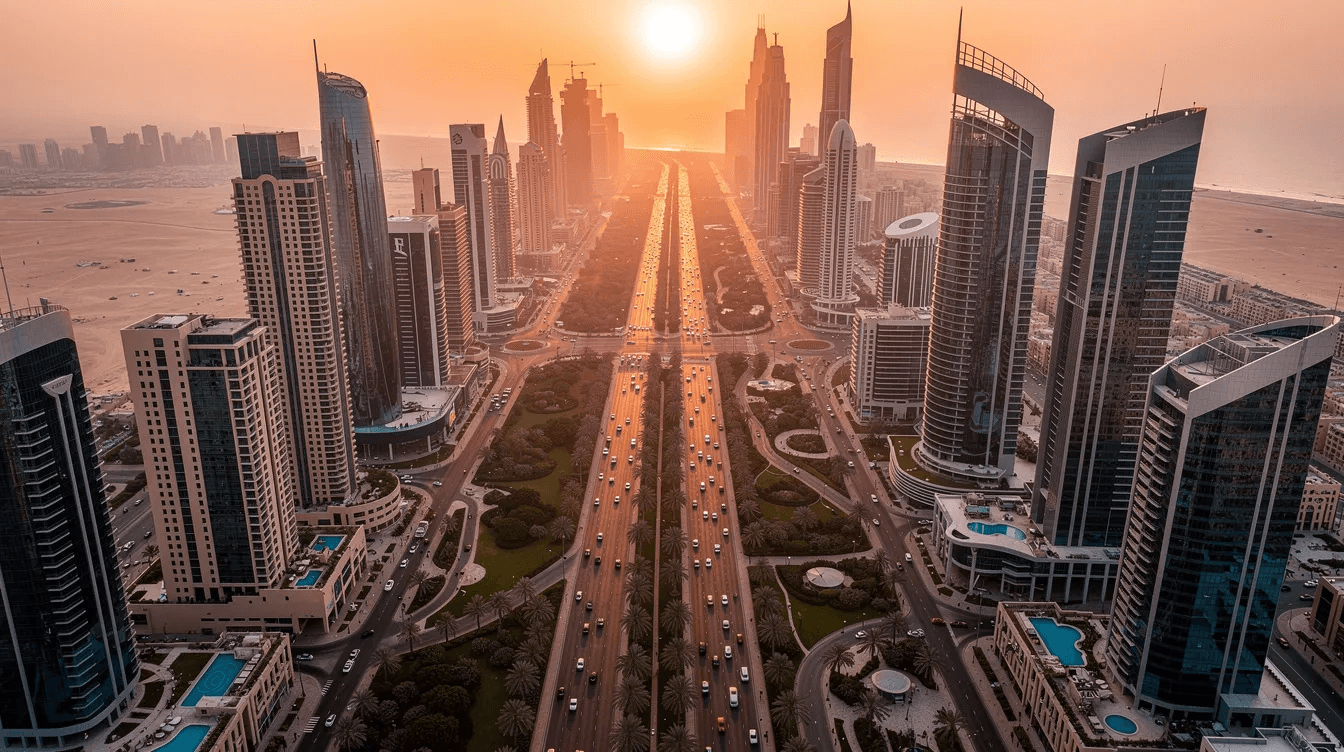
When to Rebrand: Signs Your Dubai Business Has Outgrown Its Design
Between 2022 and 2026, Dubai's business landscape shifted dramatically. New AI regulations, tighter data protection frameworks, a surge of Saudi competition, COP28 legacy commitments, and the maturation of post-Expo infrastructure have all raised the bar for how companies present themselves. If your brand was built in a different era, the friction is real - even if you can't always see it.
Here are the concrete warning signs that your business has outgrown its design:
Your brand or design assets were created before VAT launched in 2018 and have never been meaningfully updated. Logos, colour palettes, and website layouts from that era now feel like relics compared to newer entrants using modern identity systems. Clients and partners notice, even if they don't say it.
Your website still reflects pre-Expo messaging, legacy service lines, or outdated value propositions. If you've shifted from B2C to B2B, or expanded your offering, but your homepage still talks about who you were three years ago, you're misleading visitors and leaking conversion.
Your visual identity doesn't work in Arabic or is visually inconsistent between Arabic and English assets. In a multilingual market where regional expansion demands bilingual credibility, this gap erodes trust with GCC clients, regulators, and government partners.
Your brand looks weak next to competitors who invest in experience-driven design systems. Leading design thinking in the region has moved toward identity systems built for longevity - storytelling, adaptive palettes, motion. If your brand can't hold its own on a pitch deck or social feed, you're losing perception and leads.
Your presentation is inconsistent across touchpoints: office signage, website, print, events, and sales decks. Different departments produce their own versions, no one follows brand guidelines, and the result is diluted recall and weaker trust.
Your website metrics are poor: high mobile bounce rates, slow load times, weak SEO, and low conversion despite decent traffic. These are revenue leaks, not design preferences.
Investor or partner-facing materials look amateur or unaligned. When seeking Series A or B funding, pitching to institutional clients in DIFC, or entering tenders with government entities, polished design is not optional - it's table stakes.
You can't attract the talent you need. In a city where candidates browse dozens of brands online before applying, generic employer branding makes you invisible to high-calibre people.
Regulatory or free-zone feedback flags your branding. In sectors like finance, healthcare, and AI, branding claims and compliance messaging face increasing scrutiny. Visual trust matters.
These signs often cluster around growth milestones: closing a funding round, expanding into new free zones like those under DWTC which saw a 41% increase in new business licences in 2025, moving from founder-led sales to structured marketing, or opening offices in Dubai Design District or Dubai Internet City.
If three or more of these signs apply to your business, it's time to plan a rebrand - not as a cosmetic refresh, but as a strategic growth step tied directly to your next business milestone.
Why a Design Agency in Dubai (Not Just Anywhere) Matters
Geography matters for design work, especially in a market as specific as Dubai's. This is a multilingual, regulation-conscious, high-speed environment where cultural codes, audience expectations, and legal requirements differ meaningfully from London, New York, or Singapore. Hiring purely overseas may save on hourly rates, but it rarely saves on outcomes.
Here are the specific advantages of working with a Dubai-based design agency:
Timezone alignment with GCC decision-makers and markets. When your agency operates in the same hours as your leadership team, your Saudi distributors, and your Omani partners, approvals move faster and smooth communication reduces project drag.
Deep understanding of Arabic and English audiences, and often Hindi and Urdu communities too. A design agency in Dubai knows that bilingual design is not translation - it's a complete rethinking of layout, typography, and visual hierarchy for diverse audiences.
Awareness of local regulations and industry-specific advertising rules. Banking compliance in DIFC, healthcare advertising restrictions under Dubai Health Authority, real estate marketing codes from RERA - these aren't footnotes. They shape what your brand can and cannot say, and how it says it.
Familiarity with Dubai's visual and cultural codes. What reads as "premium" in Dubai may not in Berlin. What resonates with a local culture audience at Cityscape or Arabian Travel Market requires a different sensibility than a generic global template.
Experience working with free zones like DIFC, DMCC, Dubai Media City, and Dubai Design District (d3). Each free zone has its own audience, investor profile, and positioning expectations. An agency that has delivered projects across these environments understands what brand positioning works for investor communications, regulatory contexts, and B2B sales.
Faster vendor coordination. Print houses, signage fabricators, fit-out contractors, and event production teams are all local. A Dubai-based design company manages these handoffs more efficiently because they've done it dozens of times.
Contrast this with hiring a purely overseas agency: cheaper hourly rates, yes, but weaker local insight, slower approvals due to timezone gaps, and culturally misaligned creative concepts that need multiple rounds of correction.
From Logo to Full Service Design: What a Modern Dubai Design Agency Actually Does
The era of hiring a designer to make a logo and calling it done is over. Leading agencies in Dubai have evolved into full service design partners, covering brand strategy, visual identity, digital solutions, and ongoing creative support under a single strategic umbrella. This shift reflects how businesses actually operate - your brand touches everything, so your design services need to as well.
Here's what the core service pillars look like:
Brand strategy and positioning. Before any pixel is pushed, a strong agency defines your market position, target audience, messaging architecture, and competitive differentiation. This is the strategic expertise that separates lasting brands from pretty logos.
Visual identity systems. Logo design, colour systems, typography pairings (Latin and Arabic), iconography, photography direction, and motion principles - all codified into brand guidelines that any team member or vendor can follow.
Website and product UI/UX. From user research to wireframes to high-fidelity prototypes, this covers web design, mobile app development, and product interfaces. The goal is user friendly websites and digital products that convert, not just look good.
Webflow or modern CMS builds. Many Dubai businesses now choose Webflow for its speed, visual editing capabilities, and reduced developer dependency - especially for marketing sites that need frequent updates.
Motion and content design for social media. Social media management demands a constant stream of high quality visuals. Agencies produce templates, animated content, and campaign-specific assets that keep feeds consistent.
Investor presentation design. Pitch decks, one-pagers, and data room materials designed to match the ambition of your business and the expectations of DIFC or international investors.
Ongoing design retainers. Rather than project-by-project engagements, many businesses now retain a dedicated team for continuous creative output - campaign assets, landing pages, sales materials, and event branding.
Full service design differs from hiring multiple freelancers because it provides a single strategic vision, unified art direction, and consistent brand identity across channels. Over 12–24 months, this approach typically delivers cost effective outcomes compared to cobbling together fragmented vendors who don't talk to each other.
Brand Identity: Building a Dubai-Ready Brand That Can Scale Across MENA
In practice, brand identity means much more than a logo. It's the complete system - colours, typography, imagery style, tone of voice, and how all of it performs in both English and Arabic across digital platforms, printed materials, office environments, and investor decks. For businesses operating in Dubai and the wider GCC, this system must be designed for regional scale from day one.
Here are the crucial components:
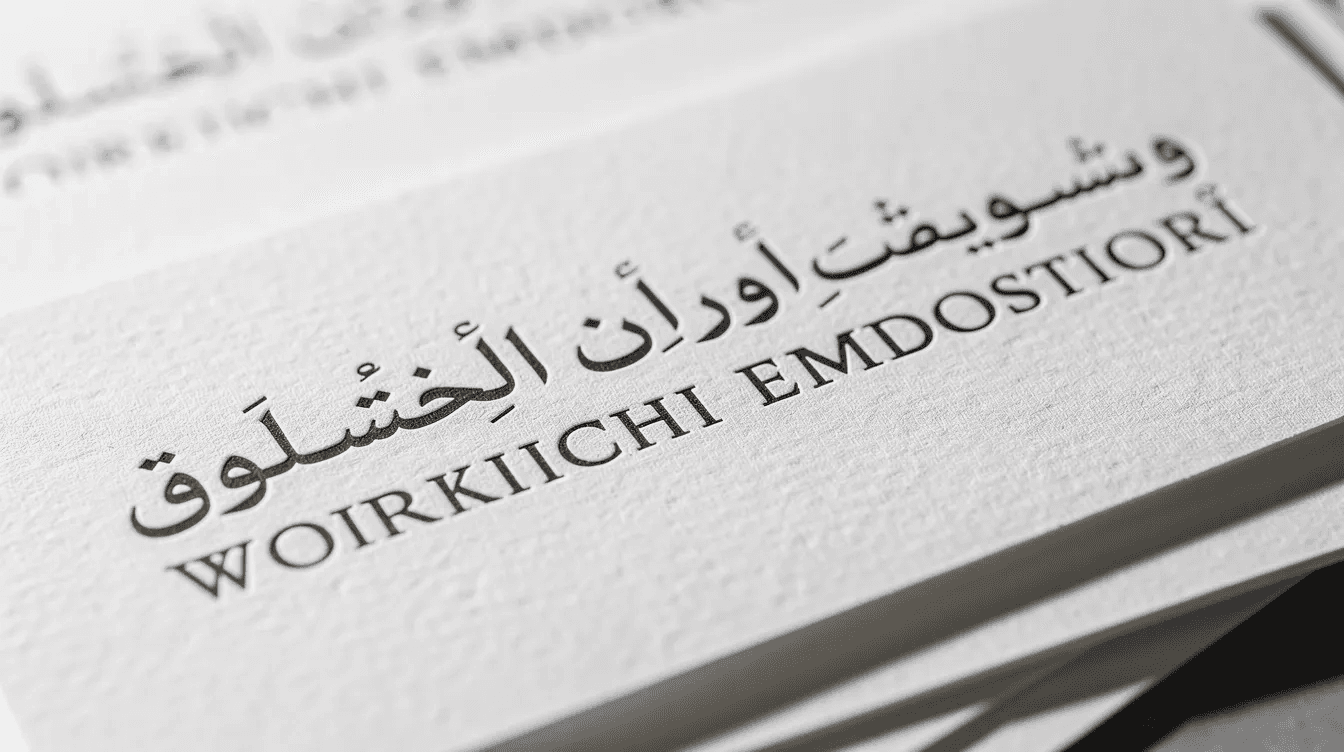
Bilingual logo lockups. Your logo needs to work in English, Arabic, and combined formats without losing legibility or balance. This isn't an afterthought - it's a core design challenge that affects every touchpoint.
Typographic pairings for Latin and Arabic. Not all Arabic typefaces pair well with their Latin counterparts. The best branding agencies test combinations for weight, rhythm, and readability across screen sizes and print formats.
Adaptable colour systems. Dubai's environment - bright sunlight, high-contrast outdoor advertising, and vibrant digital screens - demands colours that hold up. A colour palette designed for Nordic web screens may wash out entirely on a Sheikh Zayed Road billboard.
Photography and illustration direction. Guidelines for imagery ensure your brand feels consistent whether it's a LinkedIn post, a trade show banner, or a sales deck. The imagery should reflect the visuals resonate principle - connecting with the specific audiences you serve.
Tone of voice framework. How your brand sounds in English and Arabic, across formal investor communications and casual social posts, needs to be defined, not improvised.
Slide and pitch templates. Aligned with regional investor norms and formatted for both Arabic and English presentations, these assets directly support fundraising and business development.
A full brand identity system codified in guidelines. This document - or interactive platform - becomes the single source of truth for every team member, vendor, and partner who touches your brand.
A branding agency in Dubai aligns this full brand identity system with strategic positioning: premium versus mass-market, local versus global, B2B versus D2C. The positioning differs significantly across sectors like real estate, fintech, tourism, and government - and the visual identity must reflect that.
Well-designed brand identities improve measurable metrics: trust in regulated industries, conversion on landing pages, recruitment of global talent, and clarity in cross-border deals across the middle east.
Digital-First Experiences: Websites, UI/UX, and Webflow in Dubai
Dubai businesses in 2026 operate in one of the world's most digitally advanced environments. Smartphone penetration is among the highest globally, e-government services set user expectations sky-high, and your customers compare your website not against your competitors, but against the best apps they use daily. Digital is not a channel - it's the primary stage.
Here's what digital design services from a capable design company should cover:
UX research with local audiences. Understanding how users in Dubai, Riyadh, and Doha actually navigate, search, and decide is different from Western assumptions. Research grounds design in reality, not guesswork.
Responsive, mobile-first design for both English and Arabic. Web design services must account for right-to-left layouts, mirrored navigation, and touch-first interaction patterns without compromising quality on either language version.
Webflow or equivalent CMS builds. Webflow has become popular among Dubai businesses because marketing teams can make visual edits, manage bilingual content, and launch pages faster - with reduced dependency on developers.
Optimised funnels for leads and bookings. Every page should guide users toward a clear action. Whether it's a demo request for B2B SaaS or a reservation for a restaurant, the flow must be frictionless.
Integration with CRM and marketing automation. Web development that connects directly to HubSpot, Salesforce, or local CRM tools ensures leads don't fall through cracks between departments.
Template-based sites versus custom ui ux design. For sectors like hospitality, real estate, and fintech, the difference is measurable - one home services company saw a 40% drop in enquiries after launching a template-driven site, while a fashion retailer improved conversion from 0.3% to 2.4% after investing in custom UX, speed, and product page design.
Performance tracking from day one. Analytics, heatmaps, and conversion tracking should be baked into the build, not added as an afterthought.
Strong digital design translates directly into business outcomes: lower bounce rates, higher form completions, better lead quality, and stronger perception among investors or partners who visit your site before taking a meeting. For expert support in this area, consider partnering with a Dubai agency specialising in web design and development.
Branding vs Digital Marketing: How a Design Agency Fits Into Your Growth Stack
Branding and digital marketing are complementary but different disciplines, and understanding where each fits saves you from misallocating budget. Brand strategy and identity work define who you are, how you look, and what you stand for. Digital marketing - SEO, paid ads, social media marketing, email campaigns - amplifies that identity across channels to reach your target audience. One builds the asset; the other activates it.
Here's how these functions work together in Dubai's typical marketing stack:
The sequence matters. First, define brand strategy and identity. Then build digital assets - website, landing pages, social templates. Then activate via digital marketing channels. Skipping straight to ads without a strong brand is like turning up the volume on a bad recording.
A design agency and a digital marketing agency can collaborate. The design agency creates the brand message, creative assets, and conversion-optimised pages. The digital marketing agency runs performance campaigns, manages social media, and handles media buying. The best outcomes come when both share a unified brief.
A full service design partner can cover multiple roles. Some agencies combine brand, web, and content design under one roof while integrating with specialist media agencies for paid channels. This reduces handoffs and keeps creative consistency tight.
Strong design directly improves marketing spend effectiveness. Better-designed ads get higher click-through rates. More trustworthy landing pages convert more visitors. Higher-quality social content earns better engagement. Design is not separate from marketing strategies - it's a multiplier.
Concrete examples from Dubai. A B2B SaaS company in DIFC running LinkedIn campaigns will see dramatically different lead quality depending on whether their landing page feels credible or generic. An e-commerce brand running performance marketing will convert better with high quality visuals and clear messaging than with stock photography and vague copy.
For CMOs and founders deciding how to allocate budgets: invest in design first to build the foundation, then invest in digital marketing to scale it. The returns compound. Agencies offering SEO optimisation and paid media services can complement your design efforts effectively.
Cost-Effective Outcomes: Why a Design Agency Often Beats Hiring In-House
Many Dubai SMEs and growth-stage startups wrestle with the agency-versus-in-house question. The instinct to hire a full-time designer feels safer - someone who's always available, who "gets" the brand. But the economics in Dubai tell a more nuanced story, especially for companies that aren't yet large enough to justify a complete creative department.
Consider what building an in-house team actually costs in Dubai's 2025–2026 market:
Salary and benefits. A senior designer in Dubai commands a competitive salary, plus housing, insurance, and annual flights. A brand strategist, a web developer, and a motion designer - the minimum for meaningful coverage - triple that cost.
Visa and operational overhead. Employment visas, office space per employee, software licences (Figma, Adobe, Webflow), and hardware add up quickly in a city where business setup costs are non-trivial.
Turnover and recruitment risk. Dubai's job market moves fast. Losing a key designer mid-project means months of recruitment, onboarding, and catching up - a disruption that rarely happens with a design agency.
Management time. Someone on your leadership team needs to manage the creative function: set briefs, review work, provide direction. That project management overhead often falls on already-stretched founders or marketing leads.
A design agency offers a "senior team on demand" model: brand strategist, art director, UI/UX designer, motion designer, and copywriter - all bundled into one monthly or project fee, without compromising quality. You get a depth of talent that no single hire can replicate.
Scenario example: A six-month rebrand and website project for a Dubai fintech. Building an in-house team for this period means hiring, onboarding, managing, and then potentially downsizing once the project wraps. An agency delivers the same scope with an experienced, pre-built team, then transitions to a lighter retainer for ongoing support.
The non-financial benefits also matter: faster time to market, fewer redesign cycles because strategic expertise is applied from day one, and stronger first-time-right outcomes that reduce wasted spend.
Fresh Perspectives: Global Creativity Grounded in Dubai Reality
Dubai sits at the intersection of global and local in a way few cities can match. Its population draws from over 200 nationalities. Its business culture blends Gulf traditions with Silicon Valley ambition, European craft, and South Asian energy. The best design agencies in this market reflect that mix - combining international design standards with a deep understanding of local nuance.
Here's how fresh perspectives from an experienced agency improve brand work:
Challenging legacy assumptions. Founders often hold tightly to decisions made years ago. An external creative design agency asks the uncomfortable questions - "Does this positioning still hold?" "Is this colour system limiting you?" - that internal teams hesitate to raise.
Benchmarking against global leaders, not just local competitors. A strong agency knows what world-class looks like in your sector and pushes your brand toward that standard, not just toward being "better than the company next door."
Mixing design influences from across cultures. Dubai's diverse audiences respond to visual languages that blend European minimalism, Arabic calligraphic tradition, and contemporary digital aesthetics. Agencies with creative teams drawn from multiple backgrounds bring this synthesis naturally.
Cross-industry learnings. A solution designed for a hospitality brand's booking experience might inspire a cleaner onboarding flow for a fintech app. An approach to wayfinding in retail can inform how a logistics company structures its dashboard. These connections happen when agencies work across various industries.
Anticipating trends. From AI-native branding to sustainability-first visual systems, agencies working across various sectors spot patterns earlier than in-house teams operating in a single vertical.
These fresh perspectives translate into measurable shifts: higher-quality briefs, bolder creative territories, and brand platforms that feel relevant in 2026 - not stuck in 2015. For sectors common in Dubai - real estate, tourism, banking, logistics, healthcare - this outside-in view is often the difference between incremental improvement and genuine transformation.
Design Services You Should Expect from a Top Design Company in Dubai
When shortlisting agencies, knowing what to expect separates serious businesses seeking comprehensive services from those who settle for the first option they find. Here's a checklist of graphic design services and broader creative services that a capable firm should offer:
Brand audits. Before any creative work begins, an honest assessment of your current brand - strengths, gaps, competitive positioning, and audience perception - sets the foundation for everything that follows.
Naming and verbal identity. For new ventures or major pivots, naming, tagline development, and messaging frameworks are strategic work that requires both linguistic skill and market awareness.
Visual identity systems. The complete toolkit: logo design, colour palette, typography, iconography, imagery direction, and motion principles. These unique brand identities must be documented in detailed brand guidelines.
Website and product UI/UX. Research-driven design for marketing sites, e-commerce platforms, and digital products - covering information architecture, wireframes, prototypes, and final design.
Webflow and CMS builds. Development that gives marketing teams autonomy to update content, launch landing pages, and manage bilingual sites without constant developer involvement.
Motion and video graphics. From social media animations to explainer videos, motion design is now essential for brand engagement across platforms. This is where graphic design meets storytelling.
Packaging design. For product-based businesses in retail, F&B, or beauty, packaging is often the most tangible brand touchpoint - and the one that determines shelf-level purchase decisions.
Environmental graphics and interior design for offices, events, and retail spaces. Signage, wayfinding, exhibition booths, and office branding - the physical extension of your visual identity.
Investor presentation and sales deck design. High-stakes materials that need to balance clarity, data density, and visual polish for sophisticated audiences.
Bilingual content adaptation. Arabic and English versions of key assets - websites, sales decks, social templates - designed rather than simply translated.
A full service design approach keeps all these outputs stylistically consistent and easier to manage, whether you need a one-time rebrand or ongoing creative output. Adjacent services like basic marketing collateral - brochures, stationery, event materials - should also be in scope, while complex media buying typically remains with digital marketing specialists.
Rebranding in Dubai: Typical Timelines, Milestones, and What to Expect
Rebrands in Dubai operate on a spectrum. A focused brand refresh - updating a colour system, refining a logo, tightening messaging - can happen in three to four weeks. A full rebrand including strategy, identity, website, and collateral rollout typically runs four to six months. Understanding the milestones helps you plan resources, manage stakeholders, and avoid the delays that derail timelines in a city that values fast execution.
Here are the key stages:
Discovery and audit (2–3 weeks). Stakeholder interviews, competitor analysis, customer research, and a thorough review of existing assets. The client's contribution here is critical - leadership needs to be available for honest conversations about where the business is heading.
Strategy and positioning (2–3 weeks). Defining brand strategy: your market position, messaging hierarchy, audience segmentation, and brand message pillars. This is where strategic insights shape every creative decision that follows.
Creative concepts exploration (2–3 weeks). The agency presents two to four distinct creative directions - not just logos, but full visual and verbal territories. These creative concepts show how the brand could look, feel, and sound across real touchpoints.
Refinement and development (2–4 weeks). The chosen direction is refined, extended across applications, and pressure-tested in Arabic and English formats. Typography, colour, imagery, and motion are finalised.
Brand guidelines creation (1–2 weeks). The complete brand identity system is documented - clear enough that any designer, vendor, or internal team member can apply it correctly.
Asset rollout (2–6 weeks, depending on scope). Website, social templates, sales decks, signage files, stationery - all produced and handed over in production-ready formats. This is where project scope determines timeline.
Internal launch and onboarding. Before going public, the new brand is presented to employees, partners, and key stakeholders. This step is often rushed but matters enormously for adoption.
External launch and post-launch support. Going live, monitoring reception, and making refinements based on real-world feedback.
A common challenge in Dubai organisations is internal alignment. Multi-country leadership, family businesses with several decision-makers, or approvals involving government-linked entities can stretch timelines significantly. The antidote is agreeing upfront on a core decision group - ideally two to three people - who can approve work without escalating every choice to a full board. Weekly cadences and structured checkpoints keep momentum in a market that doesn't wait.

How AI and Answer Engines Are Changing Brand Visibility in Dubai
The way people find businesses is shifting. Classic Google-only SEO is no longer the whole picture. AI-driven answer engines - ChatGPT, Gemini, Perplexity - now surface brands directly in conversational responses, and Dubai's regulatory landscape is adapting, with DIFC proposing changes around AI governance and a national Artificial Intelligence and Data Authority shaping the broader framework. For brands in Dubai, this means visibility is no longer just about ranking on page one - it's about being the answer.
Here's what "AI visibility" means in practice:
Structuring information for AI retrieval. Answer engines pull from well-organised, clearly written content. Brands that publish authoritative, well-structured information about their services, expertise, and market position are more likely to be cited.
Aligning brand identity with clear entities. AI systems work with entities - named companies, people, products, locations. Your brand needs to be clearly defined across your website, social profiles, and third-party directories so AI can confidently reference you.
Publishing authoritative content regularly. Thought leadership, case studies, and expert commentary establish your brand as a credible source that AI engines prioritise over generic competitors.
Design choices that support AI readability. A design agency can bake AI-friendliness into website architecture: semantic HTML, clear heading structures, concise introductory paragraphs, and schema markup integrated in collaboration with developers and SEO experts.
Specific use cases in Dubai. A B2B logistics company wanting to appear when someone asks an AI "best logistics company in Dubai" needs more than an optimised homepage - it needs a content and design ecosystem that signals expertise and trustworthiness. Similarly, a fintech in DIFC benefits from structured service pages that AI can parse and cite.
AI and traditional digital marketing work together. Design choices - layout hierarchy, content modules, information architecture - influence both AI retrieval and traditional search performance. The two are converging, not competing.
For Dubai businesses, this is a competitive edge. Companies that align their digital presence with how AI engines process and surface information will gain visibility that purely ad-driven competitors cannot buy.
Sector Deep-Dive: How Design Agencies Support Key Dubai Industries
Design challenges in Dubai vary dramatically by industry. What works for a luxury hospitality brand would be wrong for a fintech dashboard, and what a government entity needs looks nothing like an e-commerce startup. A strong creative design agency navigates these differences, adapting methodology and aesthetic sensibility to each sector's requirements.
Real estate and property development. Dubai's property market is visual-first and trust-dependent. Design agencies create project branding, interactive sales centre experiences, and digital platforms that showcase developments with immersive photography, CGI, and clean information architecture. Wayfinding and environmental graphics for model apartments and show floors are often part of the scope.
Tourism and hospitality. From hotel brands to destination marketing, this sector demands storytelling, aspiration, and seamless booking experiences. Design agencies develop brand identities that work across websites, in-room collateral, social campaigns, and event activations like Arabian Travel Market. The work must appeal to diverse audiences - from European leisure travellers to GCC families.
Banking and fintech. Trust, clarity, and regulatory compliance define this space. Design agencies build credible dashboards, onboarding flows, and marketing sites that balance approachability with the seriousness that DIFC-regulated businesses require. Every visual element must convey security without feeling cold.
Government and smart city initiatives. Dubai's government entities set a high bar for design, from Smart Dubai platforms to public service campaigns. Agencies working in this space handle multilingual public communications, accessible digital products, and branded environments that serve millions of residents and visitors.
Healthcare. Dubai Health Authority guidelines shape what can be communicated and how. Design agencies create patient-facing digital experiences, clinic branding, and awareness campaigns that balance warmth with clinical credibility - and comply with advertising restrictions.
E-commerce and retail. Product photography, online store UX, packaging design, and social commerce content drive this sector. High quality work here means fast-loading, conversion-optimised experiences across mobile and desktop, with graphic design that stops the scroll.
Logistics and supply chain. Often underestimated in design terms, logistics companies in Dubai compete for enterprise contracts where professional brand presentation, clear digital interfaces, and polished sales materials make the difference in tender evaluations.
Each sector has its own rules around brand identity, regulatory expectations, and audience psychology. A seasoned design agency understands when to be conservative and when to push boundaries - and adapts its creative solutions tailored to each industry's norms.
Choosing the Right Design Agency in Dubai: Criteria That Actually Matter
There are hundreds of agencies in Dubai and the wider GCC. The common mistake is over-focusing on price or awards without evaluating fit, process, and strategic depth. A beautiful portfolio means nothing if the agency can't work with your team, understand your sector, or deliver projects on time.
Here are the selection criteria that actually matter:
Relevant case studies. Not just "nice work" but work in your industry or for companies at your growth stage. Ask specifically how they solved strategic challenges, not just how they made things look. Look for garnered positive feedback from clients with similar ambitions.
Understanding of your industry. Can the agency speak knowledgeably about your competitive landscape? Do they ask smart questions about your market, or do they treat every brief the same way? Agencies that work across diverse industries often bring valuable cross-pollination, but they need foundational sector knowledge.
Strength in both strategy and execution. Some agencies are brilliant strategists but struggle to deliver polished final assets. Others produce beautiful visuals but can't articulate why. You need both. Look for a balance of strategic expertise and creative excellence.
Bilingual capacity. If your brand operates in Arabic and English - and in Dubai, it should - the agency must have native-level Arabic design capability, not just translation services bolted on at the end.
Seniority of team. Who will actually work on your account? Ask to meet the people, not just the pitch team. Junior-heavy teams may struggle with complex briefs and high quality standards.
Clarity of process. A well-defined workflow - discovery, strategy, concepts, refinement, rollout - signals professionalism and reduces risk. If an agency can't clearly explain their process, expect chaos once work begins.
Transparency on pricing. Hidden costs, vague scoping, and surprise invoices destroy trust. Look for agencies that provide clear project scope breakdowns and honest conversations about what's included.
Cultural fit. You'll be working closely with this team for months. Do they communicate in a way that works for your organisation? Are they responsive? Do they challenge your thinking constructively?
Branding agency versus digital marketing agency versus design studio. If your priority is a rebrand, choose an agency with deep brand strategy capability. If it's a website, prioritise ui ux design and web development skills. If it's performance marketing, that's a different type of strategic partner altogether.
A simple internal approach: rate shortlisted agencies on strategy, creativity, technical delivery, and relationship fit. The highest-scoring option across all four dimensions - not just the cheapest or the flashiest - is usually the right choice.
What It's Like to Work with a Full Service Design Partner Month-to-Month
Many Dubai businesses are moving beyond project-based engagements toward ongoing retainers with a design agency. The logic is straightforward: your brand doesn't stop needing creative output after a rebrand launches. Campaigns, events, sales materials, social content, and product updates require a constant rhythm of design led work.
Here's what a typical month looks like with a retainer-based creative partner:
Monthly planning call. You and the agency align on priorities: what campaigns are launching, what events are approaching, what assets need updating. This replaces ad-hoc requests with structured, prioritised work.
Prioritised task list. Based on the planning call, the agency manages a rolling list of deliverables - from quick social graphics to more involved landing page designs - ensuring the highest-impact work gets done first.
Rapid iterations on social and campaign assets. Arabic and English social posts, updated banner ads, event-specific visuals - produced quickly because the agency already knows your brand inside out.
Occasional larger initiatives. Within the retainer hours, you can allocate time for bigger projects: a new landing page for a product launch, a refreshed sales deck for a trade show, or Webflow edits to your site.
Performance-oriented creative tweaks. Based on analytics, the agency adjusts design elements - CTA buttons, hero images, form layouts - to improve lead generation and conversion.
Common deliverables for a Dubai-based retainer include Arabic and English social content, sales decks updated for events like GITEX or Arabian Travel Market, event branding, Webflow site updates, and CX improvements based on user feedback.
Over six to twelve months, cost effective outcomes emerge naturally. The agency becomes deeply familiar with the brand, reducing revision cycles and misfires. Brand engagement across channels improves because everything stays consistent. And your marketing team gains capacity without the overhead of additional permanent hires - a model that supports real business growth.
Designing for Arabic and English: Bilingual Brand Systems That Actually Work
Bilingual design is not optional in Dubai. Government mandates require Arabic across official communications. Audience expectations demand it in consumer-facing contexts. And cross-border trade within the Arab world - Saudi Arabia, Qatar, Bahrain, Oman - makes Arabic fluency a commercial necessity, not a nice-to-have.
Yet bilingual design remains one of the most frequently mishandled aspects of branding in the region. Here's what gets it right:
Choosing compatible Arabic and Latin typefaces. Not every Arabic font pairs well with its Latin counterpart. Weight, x-height, rhythm, and character width need to harmonise. The best agencies test these pairings extensively across body copy, headlines, and UI elements before committing.
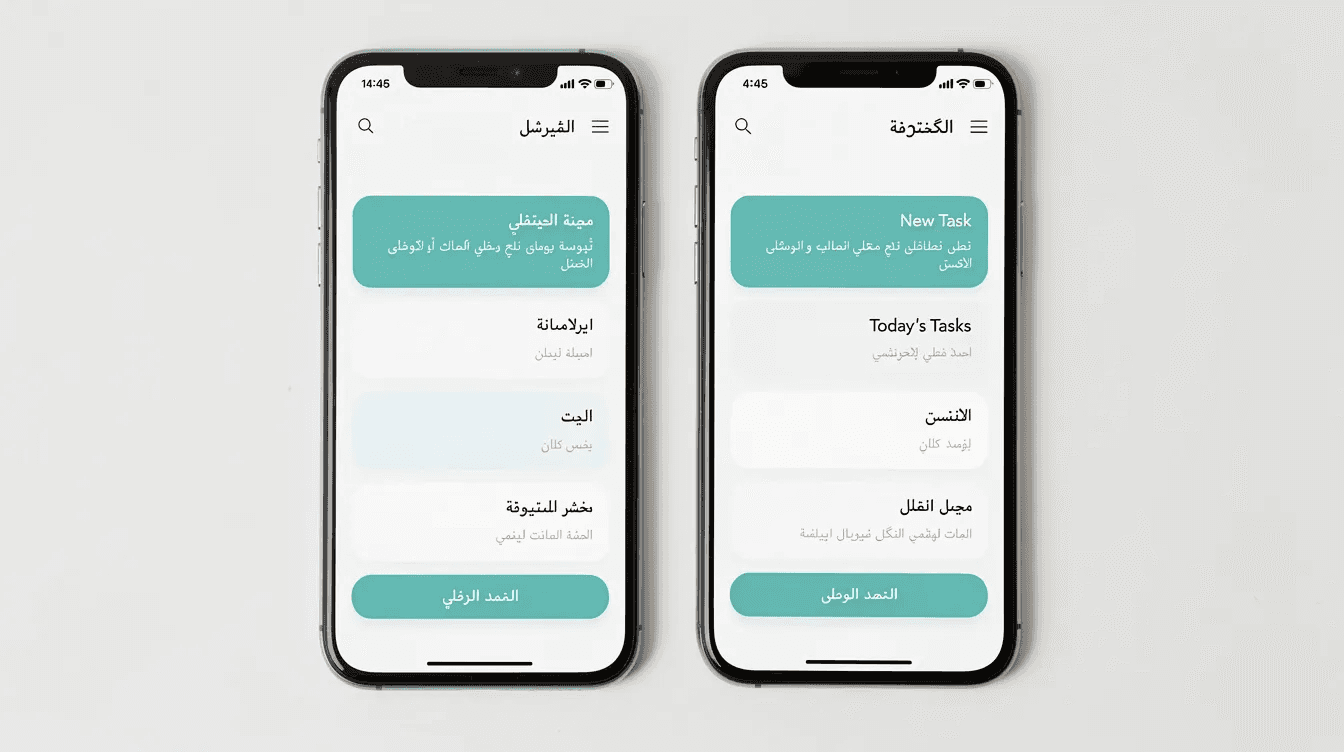
Mirroring layouts for right-to-left interfaces. RTL design is not simply "flip the page." Navigation hierarchies, reading patterns, image placement, and form layouts all need rethinking. A hamburger menu that works intuitively in English may confuse Arabic users if not properly adapted.
Adapting logos and wordmarks. Bilingual logo lockups must balance visual weight between Arabic and English versions. Some brands create separate Arabic wordmarks; others integrate both scripts into a single mark. The key is that neither language feels like an afterthought.
Keeping tone of voice aligned across languages. Arabic communication norms differ from English - formality levels, sentence structure, and cultural references all shift. A strong brand message must feel native in both languages, not like a translation.
Practical digital considerations. Navigation, forms, and content blocks must support both LTR and RTL on mobile and desktop. For sectors like banking, education, and government services, this is not just a design preference - it's a compliance and usability requirement.
Testing with real users. A specialised branding agency in Dubai tests bilingual brand systems with actual Arabic and English readers to catch legibility issues, cultural disconnects, and usability problems before launch.
Bilingual brand guidelines for regional scale. When your brand guidelines explicitly address Arabic adaptation - type specifications, layout rules, tone guidance, and asset templates - scaling across Saudi Arabia, Qatar, Bahrain, and Oman becomes dramatically smoother. Without these guidelines, every new market entry triggers improvisation and inconsistency.
Getting bilingual design wrong carries real business risk: lost credibility with Arabic-speaking clients, regulatory non-compliance, and a digital presence that signals "we didn't really think about this market." Getting it right signals respect, professionalism, and readiness to compete across the region.
From Concept to Launch: Inside a Dubai Design Agency's Workflow
Process matters as much as creativity - perhaps more in Dubai, where tight deadlines around events, funding rounds, or regulatory windows leave little room for disorganisation. Understanding how a design agency works helps you evaluate proposals, set realistic expectations, and contribute effectively as a client.
Here's the typical workflow:
Discovery workshop (Week 1–2). The agency runs structured sessions with your leadership and marketing team to understand business goals, audience, competitive landscape, and internal brand perceptions. You'll see Miro boards, interview transcripts, and competitive audit findings. Your job: be honest about where the business stands and where it's heading.
Competitive and market audit (Week 2–3). The agency analyses competitor brands, identifies gaps and opportunities, and benchmarks your current design against market standards. This grounds the strategy in evidence, not opinion.
User and stakeholder interviews (Week 2–3, often parallel). Customer interviews, partner feedback, and employee perspectives provide outside-in views. These reveal how your brand is actually perceived - which often differs from how leadership thinks it's perceived.
Strategy and creative brief (Week 3–4). The agency synthesises research into a strategic platform: positioning statement, messaging framework, audience segmentation, and creative direction. You'll be asked to approve this before any design begins - it's the blueprint everything else builds on.
Concept sprints (Week 4–6). Two to four distinct creative directions are developed, each showing how the brand would look and feel across key touchpoints: website, business card, social media post, sales deck. You'll see these in Figma or presentation format and be asked to choose a direction - or a hybrid.
Iteration and refinement (Week 6–9). The chosen direction is refined, extended, and stress-tested across applications. Arabic adaptations are developed in parallel. Webflow staging sites may be shared so you can experience the website in progress. Decisions at this stage should be made by the agreed core group, not escalated to every stakeholder.
Handover and asset production (Week 9–12). Final files, brand guidelines, templates, and production-ready assets are delivered. The agency prepares files for print vendors, signage companies, and digital platforms. Clear, detailed deliverables prevent costly mistakes during production.
Post-launch support. After launch, the agency monitors reception, addresses issues, and makes refinements. Most strong agencies offer a support window - two to four weeks - for adjustments based on real-world feedback.
One of the most common challenges in Dubai organisations is "design by committee." When too many people have approval authority, the process stalls, concepts get watered down, and timelines stretch. The solution is governance: agree upfront on who decides, establish project management rhythms, and protect the core decision group from peripheral opinions. Structured workflows reduce risk - fewer surprises, clearer budgets, and predictable go-live dates.
Pricing in 2026: What Dubai Companies Typically Invest in Branding and Design
Pricing varies widely, and any agency that quotes without understanding your specific needs is guessing. That said, Dubai has recognisable investment brackets that help businesses plan realistic budgets.
Here's how pricing typically breaks down in qualitative terms:
Lean startup brand packages. For early-stage companies needing a professional foundation - logo, basic visual identity, simple website - investment is modest but should not be so low that it produces throwaway work. These packages suit businesses seeking a strong starting point to build on.
Mid-market rebrands including website. Growth-stage companies rebranding - new identity system, comprehensive website redesign, key collateral - represent the most common engagement type. This is where most Series A/B companies and SMEs scaling across GCC invest.
Enterprise-level rebrands. Banks, government entities, and large corporates undergoing identity transformation invest significantly more, reflecting the complexity of stakeholder management, regulatory compliance, multi-market rollout, and the sheer volume of brand applications.
Ongoing monthly retainers. For continuous creative support - social content, campaign assets, landing pages, event materials - retainers offer predictable budgeting and a dedicated team without the overhead of full-time hires.
What drives cost up or down:
Number of decision-makers (more stakeholders = more revision rounds = more time)
Volume of brand applications - website, app, signage, vehicle livery, packaging, uniforms
Arabic adaptation requirements
Urgency of deadlines - rush timelines carry premiums
How to think about ROI: A well-built brand identity typically serves a business for five to ten years. Measured against that lifespan, the investment per year is far less than most companies spend annually on paid advertising. Factor in impact on pricing power, tenders won, customer acquisition cost, and investor perception, and the return often dwarfs the initial spend.
When evaluating proposals, request clear project scope definitions, phased delivery options, and transparent terms on revisions and change requests. The goal is not finding the cheapest agency - it's ensuring investment translates into high quality results that drive business growth over years, not months.
Case-Study Style Guidance: How a Dubai Rebrand Typically Plays Out
Consider a fictional but realistic scenario. A SaaS company founded in Dubai in 2017, originally serving local SMEs with a simple workflow tool, has grown. They've closed Series A funding, the product has matured, and they're expanding into Saudi Arabia and exploring European markets. But the brand - logo, website, sales materials - still reflects the scrappy startup they were five years ago. Leadership notices: enterprise prospects drop off the website, Saudi partners ask about Arabic capabilities that don't exist, and strong candidates mention in exit interviews that the company "didn't look serious."
Here's how the rebrand unfolds:
Recognising the problem. The CMO presents data: high website traffic but low conversion for enterprise demos, a crowded market with newer competitors that look sharper, and consistent positive feedback on the product that doesn't match the brand perception. The board agrees to invest.
Shortlisting agencies. The team evaluates six agencies, filtering for brand strategy depth, bilingual capability, SaaS experience, and cultural fit. Three make the shortlist, including a graphic design agency with strong digital capability and a creative design agency known for B2B work.
Running a competitive pitch. Two agencies present strategic approaches. One leads with aesthetic trends; the other leads with positioning and market analysis. Leadership chooses the latter - they want innovative solutions grounded in strategy, not just a pretty logo.
Strategy and positioning. The agency spends three weeks in discovery, interviewing customers, analysing competitors, and mapping the product's actual strengths. They redefine positioning: from "workflow tool" to "operational intelligence platform." The shift clarifies messaging and opens up the enterprise narrative.
Identity and website design. New visual identity - clean, systematic, bilingual from day one. The website is rebuilt on Webflow with separate English and Arabic experiences, conversion-optimised enterprise pages, and integrated demo booking. The agency also redesigns investor materials and sales decks.
Internal launch. Before going public, the team presents the new brand to all employees via a company-wide session. New brand guidelines are shared, email signatures updated, and internal templates rolled out.
External rollout. The new brand goes live - website, social channels, LinkedIn, and partner communications updated simultaneously. The approach mirrors patterns seen in Dubai startup rebranding case studies where a full-funnel rebrand - not just logo - drove measurable results.
Post-launch results over 6–12 months. Inbound enterprise leads increase substantially. Saudi partnership conversations progress faster with Arabic-ready materials. Senior engineering candidates cite the new digital presence as a factor in accepting offers. Investor meetings feel different - the brand now matches the ambition. The business stands stronger in every interaction.
The key takeaway: a rebrand is not a design project. It's a business strategy project with design as the primary output. The decisions and trade-offs - positioning over personal taste, market data over gut feeling, bilingual from day one - are what separate transformative rebrands from expensive logo changes.
Common Mistakes Dubai Businesses Make When Rebranding
Rebrands don't fail because of bad design. They fail because of strategy gaps, process breakdowns, or rollout missteps. Knowing the pitfalls in advance helps you avoid them - or choose an agency that knows how to navigate them.
Changing the logo without clarifying positioning. A new logo without updated messaging, competitive differentiation, or audience alignment is cosmetic surgery that doesn't address the underlying condition. If you can't articulate what's changed strategically, the rebrand won't deliver.
Ignoring Arabic adaptations until the final stage. Too many companies design everything in English and then "translate" into Arabic as an afterthought. The result: clunky layouts, mismatched typography, and an Arabic experience that feels like an inferior version. Arabic should be designed in parallel, not appended.
Involving too many decision-makers. When every department head, board member, and regional director weighs in on colour choices, creative concepts lose their edge. Establish a small approval group - and give them authority to decide.
Underestimating content and copy. Design is a vessel for words. If your website copy, taglines, and messaging haven't been rewritten to match the new brand, the visual update will feel hollow. Budget for copywriting in both English and Arabic as part of the rebrand scope.
Skipping user testing. Launching a new website or identity without testing it with actual customers is a gamble. Even light-touch testing - five to ten user interviews or usability sessions - catches issues that save thousands in post-launch fixes.
Rushing launch before assets are ready. Going live with a new logo but old business cards, outdated social profiles, and unrebuilt sales decks creates a fractured experience worse than the old brand. Launch when a critical mass of touchpoints is ready, not before.
Neglecting internal audiences. Employees are your brand's first ambassadors. If they learn about the rebrand on LinkedIn like everyone else, engagement and adoption suffer. Onboard teams - in Dubai and across GCC offices - before going public.
Not planning for coexistence. Old and new branding will coexist for weeks or months as signage is replaced, printed materials are used up, and digital assets are migrated. Plan for this transition explicitly, with guidelines for what's acceptable during the changeover period.
Choosing an agency on price alone. The cheapest option often produces work that needs to be redone within eighteen months. Evaluate based on strategic depth, process clarity, and cultural fit - not just the lowest quote.
A rebranding agency that has been through these challenges before will proactively manage each risk, build contingency into timelines, and ensure the transition is smoother than a first-time rebrand attempt by an inexperienced team.
Integrating Your New Brand Across Physical and Digital Touchpoints in Dubai
In Dubai, brand presence spans malls, trade shows, offices, digital channels, vehicle fleets, and sometimes even airport terminals. A brand identity that only exists on a website is barely a brand at all. Integration across every touchpoint is what turns a visual identity into genuine market presence.
Here are the main categories that need attention:
Website and app. The most visible touchpoint - and often the first. Every page should reflect the new brand identity, from homepage to checkout to support pages. Mobile app development, if applicable, should follow the same design system.
Social media. Profile images, cover photos, post templates, story formats, and tone of voice across Instagram, LinkedIn, TikTok, and X must be updated simultaneously. Social media management with consistent branding drives stronger recognition and brand engagement.
Sales decks and proposals. Your business development team uses these daily. New templates, updated case studies, and refreshed data visualisations aligned to the new brand - in both Arabic and English - should be prioritised immediately.
Office interiors and signage. Reception areas, meeting rooms, wayfinding signage, and co-working spaces in hubs like Dubai Internet City or d3 need to reflect the updated brand. Interior design elements like wall graphics, screen content, and welcome areas shape employee and visitor perception.
Retail or branch environments. For consumer-facing businesses, store branding, point-of-sale materials, and customer-facing screens need updating. Consistency here builds trust and reinforces the brand during the most critical moment - purchase consideration.
Events and exhibitions. Dubai's calendar is packed - GITEX, Arabian Travel Market, Cityscape, Gulfood. Consistent, well-designed event booths, printed materials, and digital displays at these gatherings amplify brand impact significantly.
Printed materials. Business cards, brochures, letterheads, and packaging where relevant. While the world is increasingly digital, Dubai's business culture still values physical collateral, especially in sectors like real estate, finance, and government.
Staff uniforms and vehicle livery. For hospitality, logistics, and facilities management businesses, branded uniforms and fleet vehicles are high-visibility touchpoints.
Working with local production vendors - print houses, signage fabricators, fit-out contractors - requires accurate, detailed design files and specifications. A Dubai-based design agency that has established vendor relationships can deliver digital solutions and physical production more efficiently, preventing costly mistakes that arise from miscommunication or incorrect file preparation.
Integration is where the real work of rebranding happens. The concept and identity are only the beginning - operationalising them across every touchpoint is what makes the investment pay off.
Measuring the Impact of Design: KPIs Dubai Leaders Should Track
Design is not purely subjective. The belief that "you can't measure creative work" is a convenient excuse that prevents accountability. Before starting any rebrand or website project, set baseline metrics - and align with your design agency on what success looks like at three, six, and twelve months post-launch.
Here are the KPIs that matter:
Website conversion rates. The percentage of visitors who take a desired action - filling a form, booking a demo, making a purchase. Improved UX and clearer messaging should move this number noticeably.
Lead quality. Not just volume, but relevance. A sharper brand message attracts better-fit prospects who are more likely to close. Track cost per acquisition alongside lead volume.
Time on page and engagement. Longer, more engaged sessions indicate that design, content, and navigation are working together. High bounce rates signal disconnects.
Cost per acquisition in digital campaigns. Strong design reduces CPA. Better ads, more trustworthy landing pages, and clearer calls-to-action mean more conversions per dollar spent - a measurable competitive edge.
Social engagement quality. Not vanity metrics, but meaningful interactions: saves, shares, comments, and click-throughs. High quality visuals and consistent branding drive stronger engagement than sporadic, off-brand content.
Tender win rates. For B2B and government-facing businesses in Dubai, the correlation between polished brand presentation and tender success is real. Track whether your win rate changes after rebranding.
Employee referral and retention metrics. A strong brand attracts and retains talent. If your hiring pipeline improves and employee satisfaction rises post-rebrand, design is contributing - even if it's hard to isolate as the sole factor.
NPS or customer satisfaction. For service businesses, Net Promoter Scores often improve when customers experience a more professional, cohesive brand across touchpoints.
Investor or partner perception. While harder to quantify, structured feedback from investors after pitch meetings can reveal whether new materials are shifting perception in the right direction.
Set up analytics foundations during the website or product redesign itself - not after. Implement tracking, define conversion goals, and establish reporting cadences so that measurement is built into the process, not bolted on as an afterthought.
Future-Proofing Your Brand in Dubai: 2026–2030 Trends to Design For
Dubai positions itself as a future city, and brands operating here are expected to reflect that forward momentum. The design choices you make today need to serve your business not just in 2026, but through 2030 and beyond. This requires building flexibility into your brand system rather than chasing trends that expire.
Here are the key forces shaping brand and design decisions:
AI-integrated customer experiences. From chatbots to personalised interfaces to AI-driven content, customer expectations are rising. Brands need modular design systems that can accommodate AI-generated content without breaking visual consistency.
Personalisation at scale. Customers expect experiences tailored to them - by language, preference, and behaviour. Adaptive design systems, flexible templates, and content architectures that support personalisation are becoming essential.
Sustainability and ESG reporting. COP28's legacy in the UAE has accelerated sustainability narratives. Brands that credibly integrate environmental responsibility into their visual identity and communications gain trust with consumers, investors, and regulators alike.
Web3 and tokenised loyalty. While early, experiments with blockchain-based loyalty programs and digital collectibles are happening in Dubai retail and hospitality. Brands with flexible identity systems can extend into these spaces without requiring a complete redesign.
Cross-border digital trade across GCC. As economic integration deepens across Saudi Arabia, UAE, Qatar, and Oman, brands need identities that scale across borders - linguistically, culturally, and commercially.
Accessible digital products. Inclusivity in design - accommodating users with different abilities, languages, and devices - is moving from "nice to have" to regulatory requirement in many sectors.
Smart Dubai and government-led initiatives. Aligning with Dubai's smart city ambitions and sustainability commitments strengthens brand positioning, especially for companies working with government or quasi-government entities.
The right creative partner helps you deliver innovative solutions that anticipate these shifts rather than react to them. It's the difference between a brand that needs another overhaul in three years and one that evolves gracefully over a decade.
Design for where your business is going. Build systems, not static assets. And choose a partner that understands both Dubai's competitive market today and the Dubai that's being built for 2030.
Conclusion: Deciding If Now Is the Right Time to Rebrand with a Dubai Design Agency
If you've read this far, you already suspect your business has outgrown its current design. The question isn't whether to rebrand - it's whether you're ready to do it right. A modern design agency in Dubai can transform how your business is perceived by customers, investors, partners, and talent across the GCC and beyond. But the impact depends on timing, commitment, and choosing the right partner.
Here are the decision checkpoints:
Clear signs you've outgrown your brand. Three or more of the warning signs from this guide apply to your business today.
Readiness to invest time and budget. A meaningful rebrand requires leadership attention, not just a purchase order. The best outcomes happen when founders and CMOs are engaged throughout.
Internal alignment. Your leadership team agrees that brand is a growth priority, not just a marketing exercise.
Long-term equity, not a quick facelift. You're aiming for a brand that serves the next five to ten years, not just next quarter's pitch.
Three steps to take next:
Audit your current brand honestly - against competitor benchmarks, audience feedback, and business performance data.
Shortlist three to four agencies based on the criteria outlined earlier: strategy depth, bilingual capability, process clarity, and cultural fit.
Run structured discovery calls focused on how each agency approaches strategy, what their process looks like, and how they measure success.
Rebranding is not a cost. It's an investment in the next stage of your business - an investment that compounds across every customer interaction, every investor meeting, every hiring conversation, and every market you enter. In the 2026–2030 Dubai and GCC landscape, the businesses that win will be the ones whose brands match their ambitions. The time to close that gap is now. For expert guidance, consider book a discovery call with a leading Dubai design agency today.
How do I know if my Dubai business needs a rebrand?
How long does a full rebrand typically take in Dubai?
What is the difference between a design agency, a branding agency and a digital marketing agency?
Why does bilingual Arabic and English design matter so much in Dubai?
Is it better to hire an in house design team or work with a Dubai agency?


Let’s keep in touch.
Discover more about high-performance web design and online marketing. Follow us on LinkedIn and Instagram.

